

Why These Three Materials Get Confused
Walk into any home improvement store and you'll find bags labeled thinset, mortar, and grout lined up within arm's reach of each other. They look similar, they're used in similar projects, and the packaging rarely explains the difference clearly. Using the wrong one - say, filling grout joints with thinset - can lead to cracked finishes, failed installations, and expensive do-overs.
This guide cuts through the confusion. Whether you're tackling a bathroom tile replacement or patching a cracked walkway, knowing which material to reach for - and why - is the most important step you can take before mixing anything.
| Primary use of thinset | Bonding tile to a substrate |
| Primary use of grout | Filling joints between set tiles |
| Primary use of masonry mortar | Laying or repointing brick and block |
| Sanded grout joint width | 1/8 inch or wider |
| Typical thinset cure time before grouting | 24 hours (verify on product label) |
| Epoxy grout advantage | Superior stain and moisture resistance |
Thinset: The Tile Adhesive
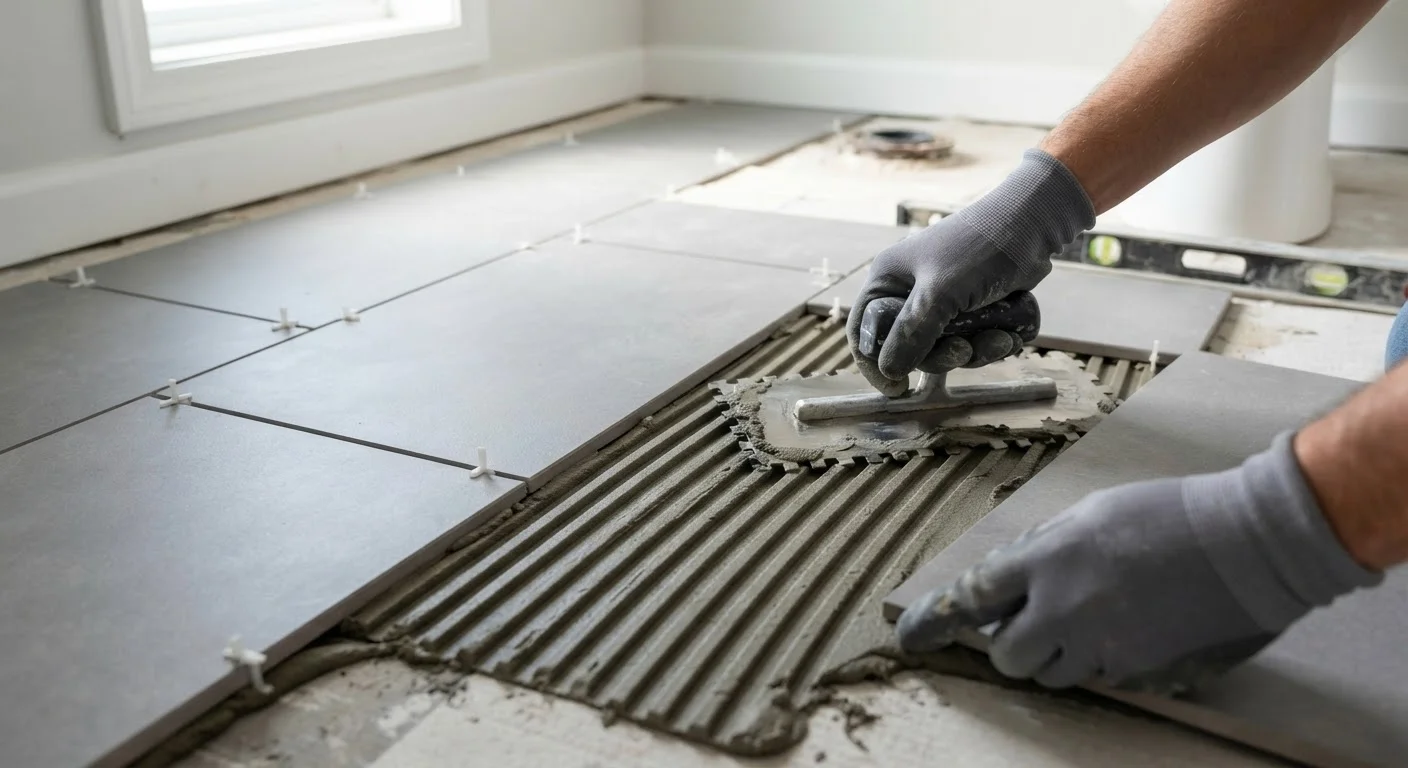
What it is: Thinset (also called thinset mortar or tile adhesive) is a cement-based compound used to bond tile directly to a substrate - the surface underneath the tile, such as cement board, concrete, or a properly prepared floor. It contains cement, fine sand, and a water-retaining additive that allows it to cure slowly and grip tile firmly.
When to use it: Thinset is your go-to material any time you're setting ceramic, porcelain, natural stone, or glass tile. It goes between the substrate and the back of the tile. It is not a filler - it's a bonding layer.
Key variations: Standard gray thinset works for most floor and wall applications. White thinset is typically used under light-colored tile or translucent glass tile where gray would show through. Modified thinset includes polymer additives for stronger adhesion on tricky substrates. Always check the tile manufacturer's recommendation before selecting a type.
Check Tile Manufacturer Guidelines First
Some tile types - particularly large-format porcelain slabs and natural stone - require specific thinset formulations to avoid lippage (uneven tile edges) or bond failure. Always review the installation instructions from both the tile manufacturer and the thinset manufacturer before purchasing. When requirements conflict, contact the tile manufacturer directly for guidance.
Mortar: The Structural Binder
What it is: In everyday home repair language, "mortar" usually refers to a mixture of cement, sand, and water used to bond masonry materials - bricks, concrete blocks, or stone. It is the original building adhesive and has been used in construction for centuries.
When to use it: Mortar is appropriate for laying brick, setting concrete block retaining walls, repointing (repairing the joints between bricks), and some outdoor stonework applications. It is not designed for interior tile work. Using standard masonry mortar under floor tile is a common mistake - it lacks the flexibility and bonding strength that thinset provides for tile.
A note on terminology: "Mortar" is also used as an umbrella term that technically includes thinset. In practice, when a tiling guide says "mortar," it almost always means thinset. Context matters - when in doubt, read the product label carefully.
Grout: The Joint Filler
What it is: Grout is applied after tile is set. It fills the spaces (joints) between tiles, prevents moisture from getting beneath the tile surface, and gives the finished installation a clean, finished appearance. Grout does not bond tile to anything - that's thinset's job.
Sanded vs. unsanded: Sanded grout contains fine sand particles, which prevent shrinkage and cracking in wider joints (generally 1/8 inch or more). Unsanded grout is smoother and is used in narrow joints under 1/8 inch or on delicate tile surfaces like polished marble, where sanded grout could cause scratching.
Epoxy grout: A premium option made from epoxy resins rather than cement. It is highly resistant to stains, moisture, and chemicals, making it a practical choice for kitchen backsplashes and commercial applications. It requires more precise mixing and application technique than standard grout.
Once tile is fully set and thinset has cured - typically 24 hours, though product labels should be your guide - grout is mixed to a peanut butter consistency, pressed into joints with a rubber float, and wiped clean in stages before it hardens. For a full step-by-step, see our bathroom tile replacement guide.
Thinset mortar
A cement-based adhesive used to bond tile to a substrate. It contains cement, fine sand, and a water-retaining additive that helps it cure slowly and bond firmly.
Substrate
The surface underneath the tile - such as concrete, cement board, or plywood - to which thinset bonds the tile. Proper substrate preparation is essential for a lasting installation.
Grout
A cement- or epoxy-based material used to fill the joints between tiles after they are set. It seals the surface against moisture and gives the installation a finished look.
Masonry mortar
A blend of cement, sand, and water used to bond or repair brick, concrete block, and stone. It is not a substitute for thinset in tile applications.
Sanded grout
Grout containing fine sand particles, used in joints that are 1/8 inch wide or wider. The sand prevents cracking as the grout dries and cures.
Modified thinset
Thinset that includes polymer or latex additives for stronger adhesion and increased flexibility. It is often recommended for large-format tile, natural stone, or challenging substrates.
Quick Comparison: Which One Do You Need?
Still unsure which material fits your project? Use this at-a-glance breakdown:
| Task | Material to Use |
|---|---|
| Setting ceramic or porcelain tile | Thinset mortar |
| Filling gaps between set tiles | Grout (sanded or unsanded) |
| Laying brick or repointing masonry | Masonry mortar |
| Setting tile on a wet or steam-heavy area | Modified thinset + epoxy grout |
| Patching cracked brick joints outdoors | Masonry mortar |
When starting a new home improvement project, understanding your materials is just as important as understanding your space. Just as buyers benefit from knowing how the home purchase process works before making decisions, homeowners benefit from knowing their materials before touching a trowel.
The content on this site is provided for informational purposes only and should not be considered a substitute for professional advice. While we strive to provide accurate and up-to-date information, we make no guarantees regarding its completeness or accuracy. Always consult a qualified professional for advice specific to your circumstances before making any decisions.