

How the Body Changes After 50
After 50, the body undergoes several physiological shifts that affect how exercise feels, what it accomplishes, and how quickly you recover. Understanding these changes is the starting point for exercising smarter rather than simply harder.
Muscle mass declines at an accelerating rate - a process called sarcopenia - with adults losing roughly 3-5% of muscle per decade after 30, and the rate tending to increase after 50 without deliberate resistance training. Bone density also decreases, particularly in postmenopausal women, raising fracture risk. Joints may have accumulated wear, and connective tissues - tendons and ligaments - become somewhat less elastic.
Cardiovascular capacity (often measured as VO₂ max) declines gradually with age, though it responds well to aerobic conditioning. Hormonal changes, including shifts in testosterone and estrogen, affect energy levels, recovery speed, and body composition. None of these changes make fitness less achievable - they make the type of fitness you pursue more important.
3-5%
Muscle mass lost per decade after age 30
According to research cited by the National Institutes of Health, this rate tends to accelerate after age 50 without resistance training.
~30%
Reduction in fall risk with balance training
A Cochrane Review of exercise programs for older adults found that balance and functional exercises can meaningfully reduce fall rates.
2x/week
Minimum resistance training sessions recommended
The CDC and major health bodies recommend muscle-strengthening activities on at least two days per week for adults of all ages.
Why Strength Training Becomes Non-Negotiable
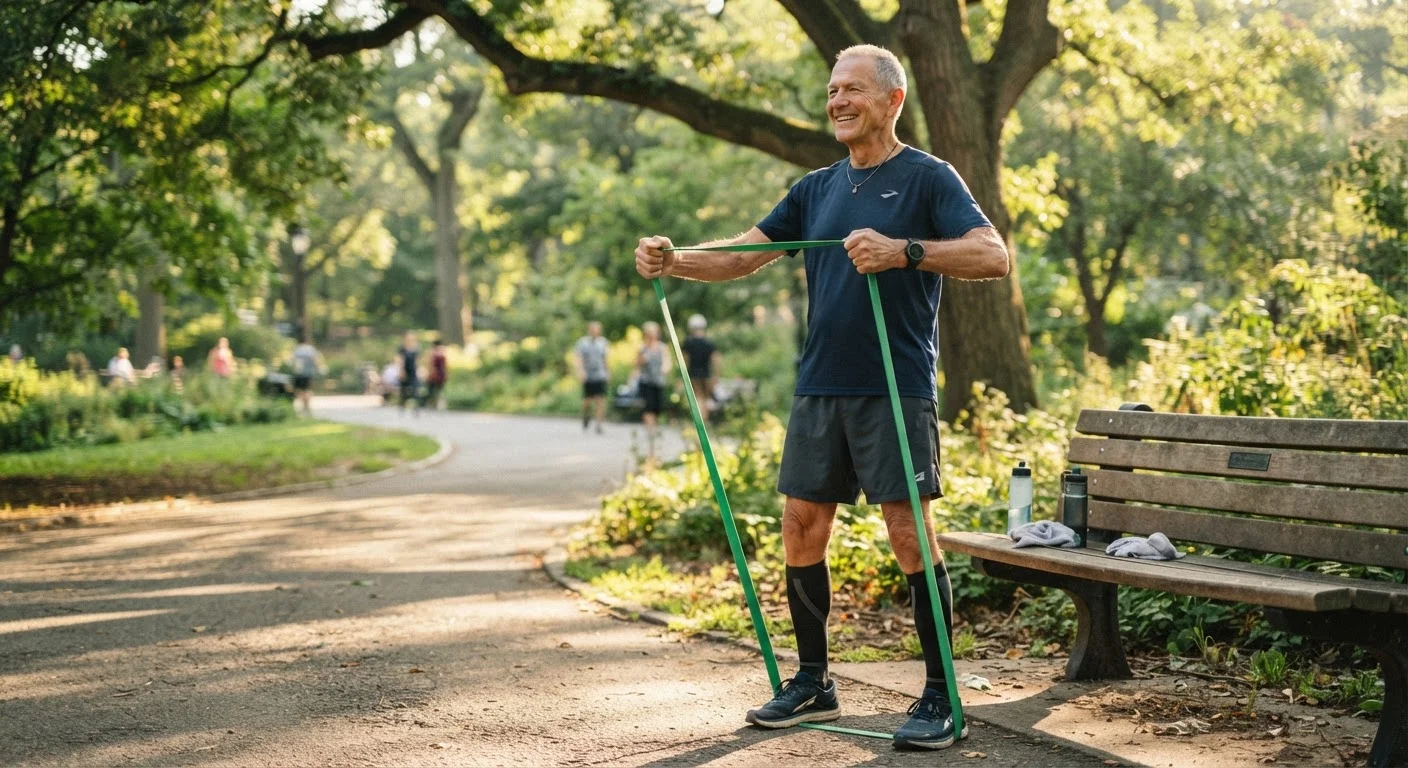
If there is one fitness priority that research most consistently elevates for adults over 50, it is resistance training. Lifting weights - or using resistance bands, bodyweight exercises, or machines - directly counters sarcopenia by stimulating muscle protein synthesis and maintaining functional strength.
The practical benefits go beyond appearance. Stronger muscles support joints, improve posture, enhance metabolic health, and make everyday tasks - carrying groceries, climbing stairs, rising from a chair - easier and safer. Research also links resistance training to improved bone density, reduced risk of type 2 diabetes, and better cognitive function.
For equipment choices, see our comparison of free weights vs. machines to find the option that fits your setting and comfort level. Two to three sessions per week targeting major muscle groups is a commonly recommended starting framework, though the right approach for you depends on your current condition and health history.
Start with compound movements - squats, hinges, rows, and presses - rather than isolated machine exercises. These engage multiple muscle groups simultaneously and build functional strength you'll use every day.
Compound lifts deliver a higher return on training time and more closely mirror real-world movement patterns, making them especially valuable for maintaining independence as you age.
Track your workouts with even the simplest method - a notebook, an app, or a basic spreadsheet. Progress visibility is one of the strongest predictors of long-term adherence.
Research on habit formation shows that objective feedback loops help sustain motivation during the inevitable periods when energy or enthusiasm dips.
This article provides general health information only. Always consult a qualified healthcare provider before beginning a new exercise program, especially if you have existing medical conditions or joint concerns.
The Case for Flexibility and Balance Work
Falls are among the most serious health threats for adults over 50 - and they are not random misfortune. Balance and proprioception (your body's sense of its own position) decline with age but respond measurably to targeted training. Practices like yoga, tai chi, and dedicated balance drills have good evidence supporting their role in fall prevention.
Flexibility work - stretching, mobility exercises - helps maintain range of motion in joints that tend to stiffen with age and inactivity. This matters for injury prevention and for making other exercise forms more comfortable and effective.
Even modest investments - 10 to 15 minutes of stretching or balance work several times a week - can yield meaningful benefits over time. These practices also tend to be accessible, low-cost, and appropriate for a wide range of fitness levels, making them ideal complements to cardio and strength work.
Cardio After 50: Smarter, Not Harder
Cardiovascular exercise remains essential after 50 for heart health, mood regulation, weight management, and longevity. The emphasis, however, often shifts toward lower-impact forms that deliver strong aerobic benefits while reducing cumulative stress on knees, hips, and ankles.
Walking is one of the most accessible and evidence-supported options available - our walking vs. running comparison breaks down how each stacks up across health goals and injury risk. Swimming, cycling, and elliptical training are similarly gentle on joints while still challenging the cardiovascular system.
High-intensity interval training (HIIT) - alternating short bursts of harder effort with recovery periods - has shown benefits for older adults in research settings, but it carries higher injury risk and is not appropriate for everyone. Moderate-intensity steady-state cardio is a safer and sustainable entry point for most people returning to or maintaining activity after 50. The goal is regular, consistent movement rather than maximum effort on any given day.
Recovery, Rest, and Listening to Your Body
One of the most important adaptations experienced exercisers make as they age is building more recovery into their schedule - not less. After 50, muscle repair takes longer, inflammation resolves more slowly, and the cumulative toll of training accumulates faster than it did at 30. Ignoring this leads to overuse injuries, chronic fatigue, and burnout.
Practical recovery strategies include: getting adequate sleep (7-9 hours is widely cited as a general target for adults), prioritizing protein intake to support muscle repair, and spacing intense sessions with lighter activity or full rest days. Active recovery - gentle walking, stretching, or mobility work on rest days - tends to work better than complete inactivity for maintaining momentum.
Nutrition plays a direct supporting role in how well the body adapts to exercise. Explore our Nutrition & Diet hub for guidance on eating habits that complement an active lifestyle. Persistent pain - as distinct from normal muscle soreness - warrants a conversation with a healthcare provider rather than a push through it.
Practical Steps to Build a Sustainable Routine
The most effective fitness routine after 50 is one you will actually maintain over months and years, not one that looks perfect on paper. Consistency is a more powerful determinant of outcomes than any specific protocol.
Before beginning a new program, use our fitness readiness checklist to assess your starting point and set realistic goals. If you are returning to exercise after a gap, our guide to starting over after a break outlines how to rebuild gradually without overdoing it. For strategies on keeping exercise a lasting habit - not just a short-term push - see our article on exercise consistency.
A well-rounded weekly plan for most adults over 50 might include: two to three strength sessions, two to three cardio sessions at moderate intensity, and daily flexibility or balance work woven in wherever it fits. The specific mix matters less than the habit of moving regularly with intention and care.
This article is for general informational purposes only and does not constitute medical advice. Speak with a qualified healthcare professional before making changes to your exercise routine, particularly if you have any health conditions, injuries, or concerns.
The content on this site is provided for informational purposes only and should not be considered a substitute for professional advice. While we strive to provide accurate and up-to-date information, we make no guarantees regarding its completeness or accuracy. Always consult a qualified professional for advice specific to your circumstances before making any decisions.