

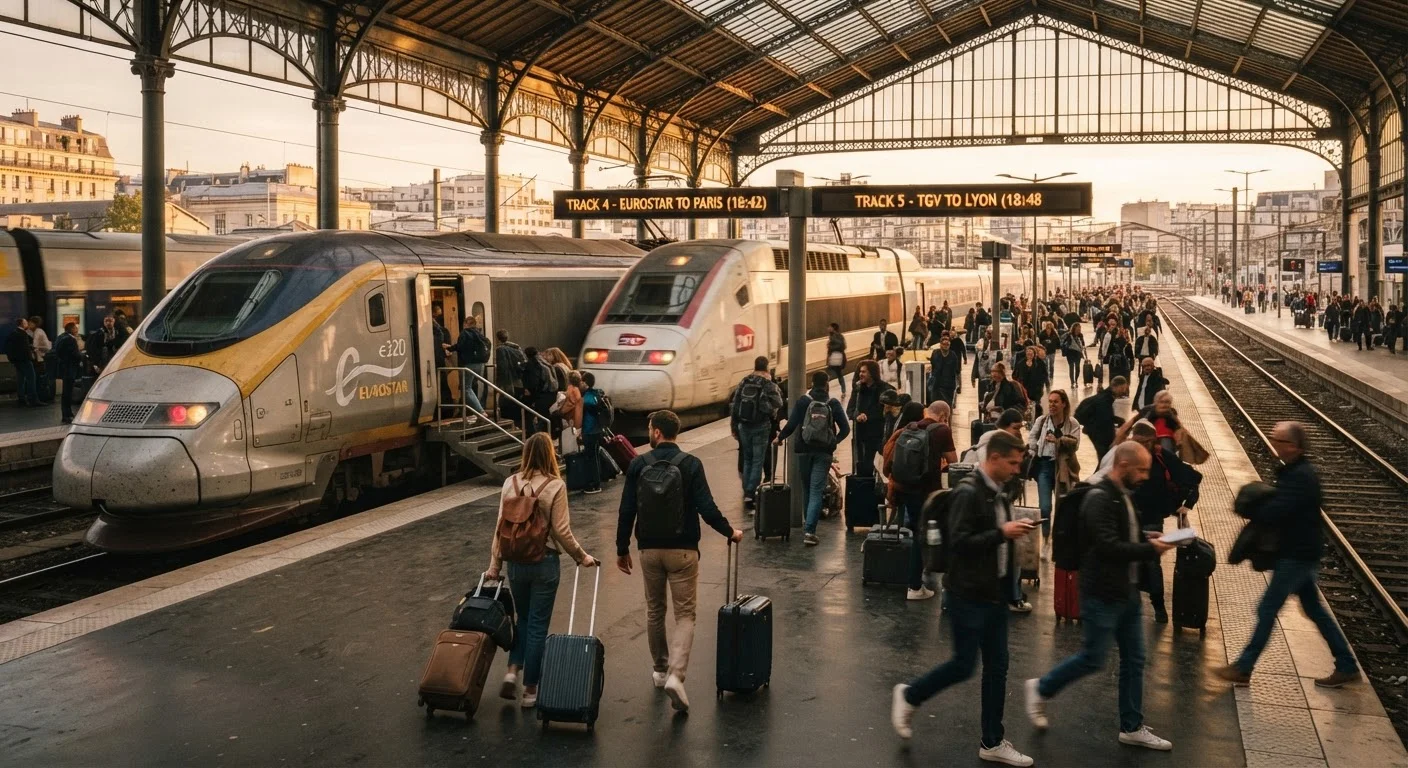
The Rail Pass Question: Flexibility vs. Real Cost
Rail passes have been a symbol of European adventure for decades, and they genuinely suit some itineraries - particularly spontaneous, multi-country trips where fixed plans aren't possible. But for the majority of US travelers who book their main routes weeks ahead, point-to-point advance tickets frequently work out to be better value. The pass's appeal lies in flexibility; its cost lies in that same flexibility being priced in.
Before committing to a pass purchase, map out your actual planned journeys, price them individually using each country's official rail website, then compare. Factor in mandatory reservation fees, which pass-holders still pay on most fast trains. The answer may surprise you - and it may well favor individual tickets for your specific route mix.
Myth
A Eurail or Interrail pass always saves money compared to buying individual tickets.
Fact
Passes offer good value on some itineraries but can cost more than advance point-to-point tickets on many popular routes.
Rail passes are genuinely useful for travelers making many stops over a short period or those who want maximum flexibility. However, on busy corridors - London to Paris, Barcelona to Madrid, Rome to Florence - advance tickets booked weeks or months ahead often cost a fraction of what a pass would imply per journey. The math only favors a pass under specific conditions. Before buying, cost out the individual routes you plan to take and compare honestly.
Myth
Once you have a pass, you can just hop on any train across Europe.
Fact
Most high-speed and international trains require a separate paid seat reservation on top of your pass.
This is probably the single most common and costly misunderstanding. Passes grant travel rights, not guaranteed seats. Reservation fees on high-speed trains typically range from a few euros to over €30 per journey, and on some routes - like the Eurostar - the mandatory reservation fee can rival the cost of a standalone budget ticket. Regional and slower trains usually don't require reservations, but the trains most travelers want to ride almost always do.
Myth
Buying tickets at the station is just as convenient and affordable as booking online.
Fact
Station windows rarely offer the cheapest fares, and advance online pricing can be dramatically lower.
European rail operators - including SNCF in France, Renfe in Spain, and Trenitalia in Italy - operate dynamic pricing similar to airlines. The lowest fare tiers sell out early, and prices rise as the departure date approaches. Booking six to twelve weeks ahead online can sometimes reduce a ticket price by 50-70% compared to a walk-up fare. Station staff are helpful for complex queries, but for standard journeys, the operator's website or official app is almost always the better starting point for price.
Myth
Rail travel is always slower than flying between European cities.
Fact
When airport time is included, trains are often faster city-center to city-center on routes under 500 miles.
City-center train stations eliminate the need to travel to a distant airport, clear security 90 minutes early, wait at baggage claim, and arrange onward transportation. On routes like Paris-Brussels, Amsterdam-London, or Milan-Rome, total door-to-door rail time frequently beats flying once all that overhead is factored in. This is why train modal share on these corridors has grown substantially in recent decades - and why travelers who "do the math" on total journey time often prefer the train.
Myth
Night trains are a cheap, basic option only for budget backpackers.
Fact
Night trains now include private compartments and cot-style sleepers on many routes, appealing to a range of travelers.
The revival of European night trains has brought meaningful upgrades. Services like the Nightjet network operated by Austrian Federal Railways (ÖBB) offer private double sleeper cabins with bedding included, as well as couchette and seated options - meaning travelers can choose their comfort level. Beyond the experience itself, arriving at a destination rested and in the city center without paying for a hotel night is a practical advantage many travelers underestimate. Prices vary widely by accommodation class and route.
Myth
All of Europe is covered by one unified rail network, so one pass covers everything seamlessly.
Fact
European rail is a patchwork of national operators with different rules, apps, and booking systems.
Booking a trip from Prague to Lisbon involves navigating multiple national operators, potentially different booking platforms, and varying reservation rules. Some cross-border routes require purchasing tickets from each country's operator separately. While the European rail landscape is becoming more connected - and projects like the EU's goal of expanding rail connectivity are progressing - it is not yet a single, friction-free system. Travelers who plan ahead and research each leg individually avoid the most common booking surprises. See our planning details that derail good trips for more on this kind of prep.
If overpacking your schedule is also a temptation, it's worth reading our guide on why cramming too much into a trip backfires - the same logic applies to rail itineraries.
What to Know Before You Board
European rail rewards travelers who do their homework. Reservation rules, ticket validity windows, and cancellation policies vary by operator and train type. Regional trains in Germany, the Czech Republic, or the Netherlands often allow flexible, walk-up boarding with a valid ticket - but intercity express services on the same network may have assigned seating and stricter terms.
Seat Reservations Are Not Always Included
Many travelers assume their rail pass covers everything needed to board. On high-speed routes - including Eurostar, TGV, AVE, and Frecciarossa services - a separate, paid seat reservation is mandatory, even with a valid pass. Boarding without one can result in being denied a seat or asked to pay a penalty fare on the spot. Always check reservation requirements for each specific train before travel.
Night trains deserve special attention if you're considering them. Booking a couchette or sleeper cabin well in advance is advisable on popular routes, particularly during summer. The Nightjet network, for example, typically opens bookings around six months ahead, and sleeper cabins on sought-after routes sell out early.
For anything border-crossing - whether entry documents, rail ticket validity across countries, or customs rules on overnight trains - always verify current requirements with official government or operator sources before departure. Conditions change, and what was accurate on a travel forum a year ago may not reflect today's rules. Our article on what US travelers get wrong about visa requirements is a useful companion read for cross-border planning.
~2.5 hrs
Paris to London by Eurostar (city center to city center)
When airport transit, security, and baggage time are included, rail often matches or beats flying on this route.
6-12 weeks
Typical advance booking window for lowest rail fares
Many European operators release their cheapest fare tiers well in advance, with prices rising as trains fill up.
€10-€40+
Typical seat reservation fee on high-speed trains
Reservation costs vary by route and operator, and are mandatory on most high-speed services even with a rail pass.
The bottom line: European rail travel is one of the most rewarding ways to see the continent, but it works on its own logic. Travelers who approach it like a domestic Amtrak journey - or assume it works like US air travel - often run into avoidable friction. A little research into each leg of your journey goes a long way toward a smooth, enjoyable trip.
The content on this site is provided for informational purposes only and should not be considered a substitute for professional advice. While we strive to provide accurate and up-to-date information, we make no guarantees regarding its completeness or accuracy. Always consult a qualified professional for advice specific to your circumstances before making any decisions.