

Start here
The Five Boroughs: What They Are and Why They Matter
Next
Manhattan: The Island Everyone Imagines
Broaden your view
Brooklyn, Queens, and Beyond: The Other Boroughs Worth Knowing
Navigate confidently
How the Grid Works - and Where It Breaks Down
Plan your stay
Where to Stay: Honest Trade-Offs by Area
Hit the ground running
Getting Around Without Getting Lost
The Five Boroughs: What They Are and Why They Matter
New York City is not just Manhattan. The city is divided into five boroughs - Manhattan, Brooklyn, Queens, the Bronx, and Staten Island - each with its own distinct character, infrastructure, and identity. Understanding this from the start prevents one of the most common first-timer mistakes: assuming the city begins and ends with the island you see in movies.
Legally, all five are part of New York City. Practically, most visitors spend the majority of their time in Manhattan and Brooklyn, with Queens worth a visit for its airports, food scene, and local neighborhoods. The Bronx is home to Yankee Stadium and the Bronx Zoo. Staten Island is reached by a free ferry ride and is the quietest of the five.
Borough
One of New York City's five administrative divisions - Manhattan, Brooklyn, Queens, the Bronx, and Staten Island. Each borough functions somewhat like its own city within the larger whole.
Uptown / Downtown
Directional shorthand in Manhattan. Uptown means toward the northern end of the island; downtown means toward the southern end. Midtown sits in between.
The Grid
The numbered street-and-avenue system that organizes most of Manhattan above 14th Street, making navigation straightforward once you understand the numbering direction.
OMNY
The contactless payment system used on New York City subway trains and buses. You tap a credit or debit card, or a phone, to pay your fare - no special transit card required.
Avenue vs. Street
In Manhattan's grid, avenues run north-south and streets run east-west. Knowing which way each runs helps you orient yourself and estimate walking distances quickly.
If you're still in the early stages of building your trip, our Travel Planning from Scratch guide walks you through the full planning process from destination choice to packing.
Manhattan: The Island Everyone Imagines
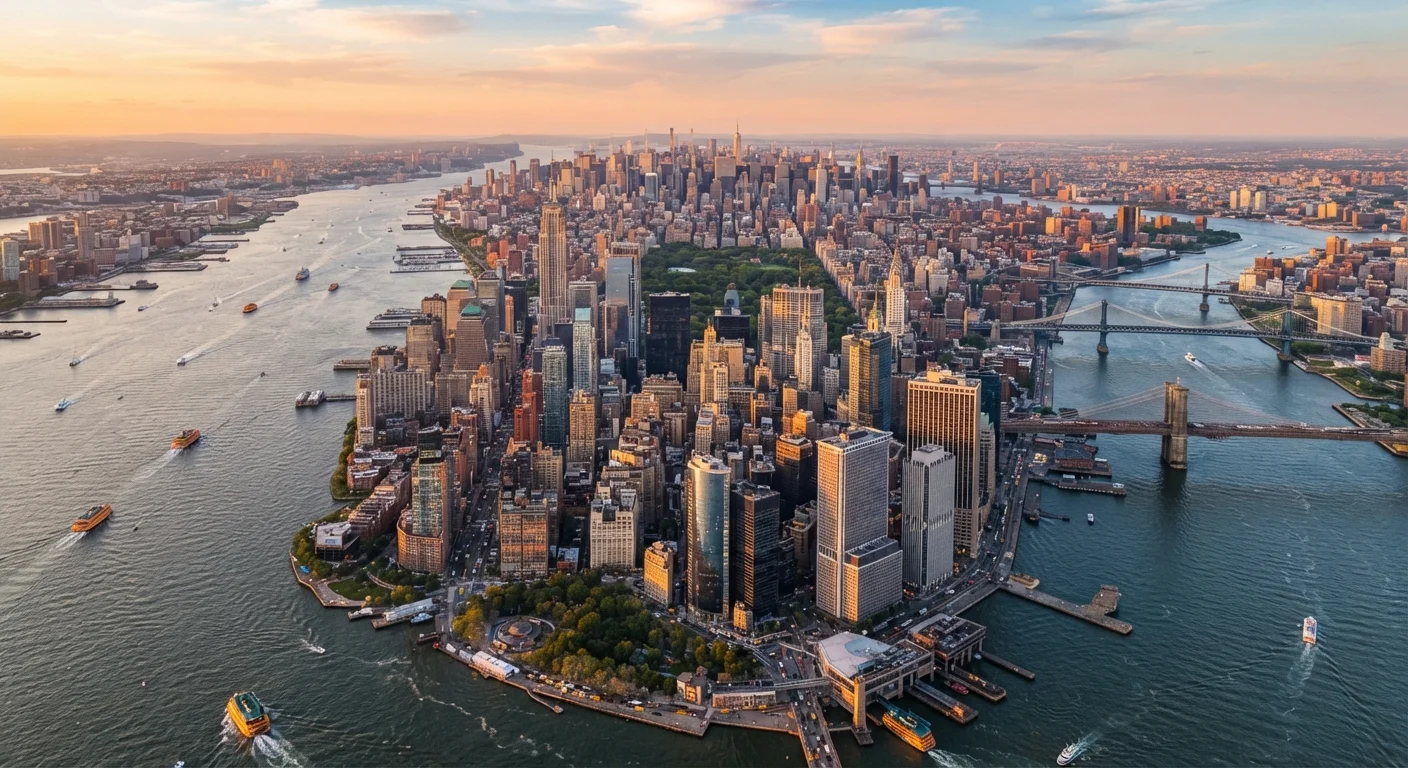
Manhattan is 13 miles long and about 2 miles wide at its broadest point - smaller than it looks on television, yet relentlessly packed. It's organized into rough thirds: Lower Manhattan (Financial District, Chinatown, SoHo), Midtown (Times Square, Central Park, the Empire State Building), and Upper Manhattan (Harlem, the Upper West and East Sides).
Midtown is where most first-timers land their accommodation because it's central. That's a reasonable choice - but be aware it's also the loudest, most congested, and often most expensive part of the city. The neighborhoods that give NYC its actual personality - the West Village, the Lower East Side, Astoria in Queens - are worth at least a half-day each.
Brooklyn, Queens, and Beyond: The Other Boroughs Worth Knowing
Brooklyn has evolved into a destination in its own right. DUMBO (Down Under the Manhattan Bridge Overpass) offers iconic bridge views. Williamsburg is dense with restaurants, bars, and weekend markets. Prospect Park rivals Central Park in greenery without the crowds. Many visitors now deliberately base themselves in Brooklyn.
Queens is the city's most ethnically diverse borough and arguably its most interesting food destination. Flushing's Chinatown, Jackson Heights' South Asian corridor, and Astoria's Greek and Middle Eastern communities offer experiences you simply won't find in tourist-heavy Manhattan pockets.
Brooklyn Is Worth a Full Day (at Least)
Many first-timers treat Brooklyn as an afterthought - a place to sleep if Manhattan hotels are full. That's a missed opportunity. Dedicate at least one full day to exploring DUMBO, the Brooklyn Bridge Park waterfront, and a neighborhood like Williamsburg or Park Slope. You'll get a very different - and often more enjoyable - side of NYC.
The Bronx and Staten Island are worth considering if you have specific interests - a Yankees game, the botanical garden, or a quieter pace - but they require a bit more planning for first-timers building a tight itinerary.
How the Grid Works - and Where It Breaks Down
Above 14th Street in Manhattan, the logic is clean: streets are numbered and run east-west; avenues are numbered (or named) and run north-south. Higher street numbers mean you're moving uptown (north). Fifth Avenue divides East from West for street addresses. Once you internalize that, navigation becomes surprisingly manageable.
Below 14th Street, the grid dissolves. Greenwich Village, the West Village, SoHo, and the Financial District were established before the 1811 grid plan was drawn up. Streets meander, angles appear, and app navigation becomes essential. Don't be embarrassed to use it - locals do too.
Where to Stay: Honest Trade-Offs by Area
Your accommodation location shapes everything from your daily budget to your walk times. Here's an honest snapshot:
- Midtown Manhattan: Extremely convenient for major sights but noisy, often pricier, and lacks neighborhood character.
- Lower Manhattan / Financial District: Quieter at night, interesting history, but feels sparse on weekends when office workers leave.
- Upper West or East Side: More residential, calmer - great if you're spending time in Central Park or the Museum Mile.
- Williamsburg, Brooklyn: Lively, well-connected via the L train, and often less expensive than comparable Manhattan options.
- Long Island City, Queens: Just one subway stop from Midtown, frequently more affordable, with riverside Manhattan views.
Whatever area you choose, prioritize subway access over proximity to any single landmark. The city rewards mobility.
Getting Around Without Getting Lost
The subway is the backbone of the city and the fastest way to cover distances between neighborhoods. Single-ride fares are charged via the OMNY contactless system (tap your card or phone) or MetroCard. Trains run 24 hours, though late-night frequency drops considerably on some lines.
Walking is underrated. Between closely spaced attractions - say, from the High Line to Chelsea Market, or from the Brooklyn Bridge to DUMBO - walking is often faster than waiting for a train and far more enjoyable. Download an offline maps app before you arrive; cell service in underground stations is inconsistent.
Skip the Rental Car in the City
Renting a car to navigate New York City is almost universally counterproductive for first-time visitors. Parking garages in Midtown can charge upwards of $40-$60 per day, street parking is extremely limited, and traffic congestion is a constant reality. The subway, walking, and occasional rideshares will serve you far better for an urban itinerary. If you plan day trips outside the city, consider renting a car specifically for those days only.
Avoid renting a car for your NYC visit unless you have a specific reason (day trips to the Hudson Valley, for instance). Parking is expensive and scarce, traffic can be grueling, and the subway genuinely outperforms driving for nearly all tourist purposes.
Frequently Asked Questions
New York City is one of the most visited cities in the world and is generally considered safe for tourists in major attraction areas. Like any large city, it's wise to stay aware of your surroundings, secure your belongings, and check neighborhood-level guidance before exploring unfamiliar areas at night. Official travel safety resources from NYC.gov can offer current information.
No - in fact, a car is a liability in most parts of NYC. The subway system covers all five boroughs, and buses supplement coverage in areas subways don't reach. Walking is practical within neighborhoods. Taxis and rideshares are widely available but can be slow in heavy traffic.
Uptown generally refers to the northern end of Manhattan, including the Upper East Side, Upper West Side, and Harlem. Downtown refers to the southern end, covering neighborhoods like the Financial District, Tribeca, and SoHo. Midtown sits in between and contains most major tourist landmarks.
Yes - both boroughs have well-connected subway access to Manhattan and often offer more affordable accommodation with a more local feel. Neighborhoods like Williamsburg in Brooklyn or Long Island City in Queens are particularly popular with visitors who want shorter commutes into Manhattan.
Travel times vary by mode and traffic. The AirTrain to Jamaica Station, then the Long Island Rail Road (LIRR) to Penn Station, typically takes around 45-60 minutes and is one of the more predictable options. Taxis and rideshares can take anywhere from 45 minutes to well over an hour depending on traffic conditions.
Most of Manhattan above 14th Street follows a numbered grid - avenues run north-south, streets run east-west. Below 14th Street, including Greenwich Village and the Financial District, the streets follow older, irregular patterns that can disorient even seasoned visitors. A maps app is genuinely helpful there.
The content on this site is provided for informational purposes only and should not be considered a substitute for professional advice. While we strive to provide accurate and up-to-date information, we make no guarantees regarding its completeness or accuracy. Always consult a qualified professional for advice specific to your circumstances before making any decisions.