

Understanding Connection Types
Before you can choose a plan, you need to know what technology physically delivers internet to your home. This shapes everything - speed potential, reliability, and price.
- Fiber-optic: Data travels as light through glass cables. Fiber offers the highest speeds and the most consistent performance, with symmetrical upload and download in many plans. Availability is still limited to urban and suburban areas.
- Cable: Uses the same coaxial lines as cable TV. Widely available and fast for downloads, though upload speeds lag - and congestion during peak hours can cause slowdowns.
- DSL (Digital Subscriber Line): Runs over copper phone lines. Broadly available in rural areas but speed drops sharply the farther you are from the provider's central hub.
- Fixed Wireless Access (FWA): A tower transmits a signal to a receiver mounted on your home. Speed and reliability depend heavily on line-of-sight to the tower and local network load.
- Satellite: Available virtually anywhere but traditionally plagued by high latency. Newer low-Earth-orbit satellite services have improved latency significantly, though they still carry higher cost and data constraints.
Check which technologies reach your specific address - ISP coverage maps frequently overstate availability at the neighborhood level.
Coverage Maps Are Not Guarantees
ISP coverage maps are marketing tools, not engineering documents. A street or even an individual address may appear covered while the actual infrastructure does not yet reach it. Always confirm service availability at your specific address by calling the provider directly or using their address-based lookup tool - before making any commitment.
Sizing Your Speed to Your Household
Speed is measured in megabits per second (Mbps). ISPs market headline download speeds, but what matters is sustained throughput across all your connected devices simultaneously.
25 Mbps
FCC minimum broadband definition (download)
The FCC defines broadband as at least 25 Mbps download and 3 Mbps upload, though many households need considerably more.
16+
Average connected devices per U.S. household
According to Deloitte's Digital Media Trends research, the average American household connects more than 16 devices to home Wi-Fi networks.
A practical starting framework: allow roughly 25 Mbps per active heavy user (someone streaming 4K video or video conferencing) and 5-10 Mbps per light user (browsing, messaging). Add headroom for smart home devices, security cameras, and anything that runs in the background.
Upload speed is increasingly important. Remote work, video calls, and cloud backups are upload-intensive. Cable and DSL plans often provide only a fraction of download speed on the upload side - worth clarifying before you sign.
Always test your actual speeds using a wired ethernet connection, not Wi-Fi, when evaluating whether you're getting what you pay for.
Wi-Fi introduces wireless interference and signal loss that can make an ISP problem look like a router problem - or vice versa. Wired tests isolate the ISP's delivered speed.
Ask your ISP specifically about upload speeds before committing to a plan, not just the advertised download figure.
Many cable and DSL plans market impressive download numbers while offering upload speeds a fraction of that size - a real limitation for remote workers and anyone using cloud storage.
Equipment: Modem, Router, and Mesh Systems
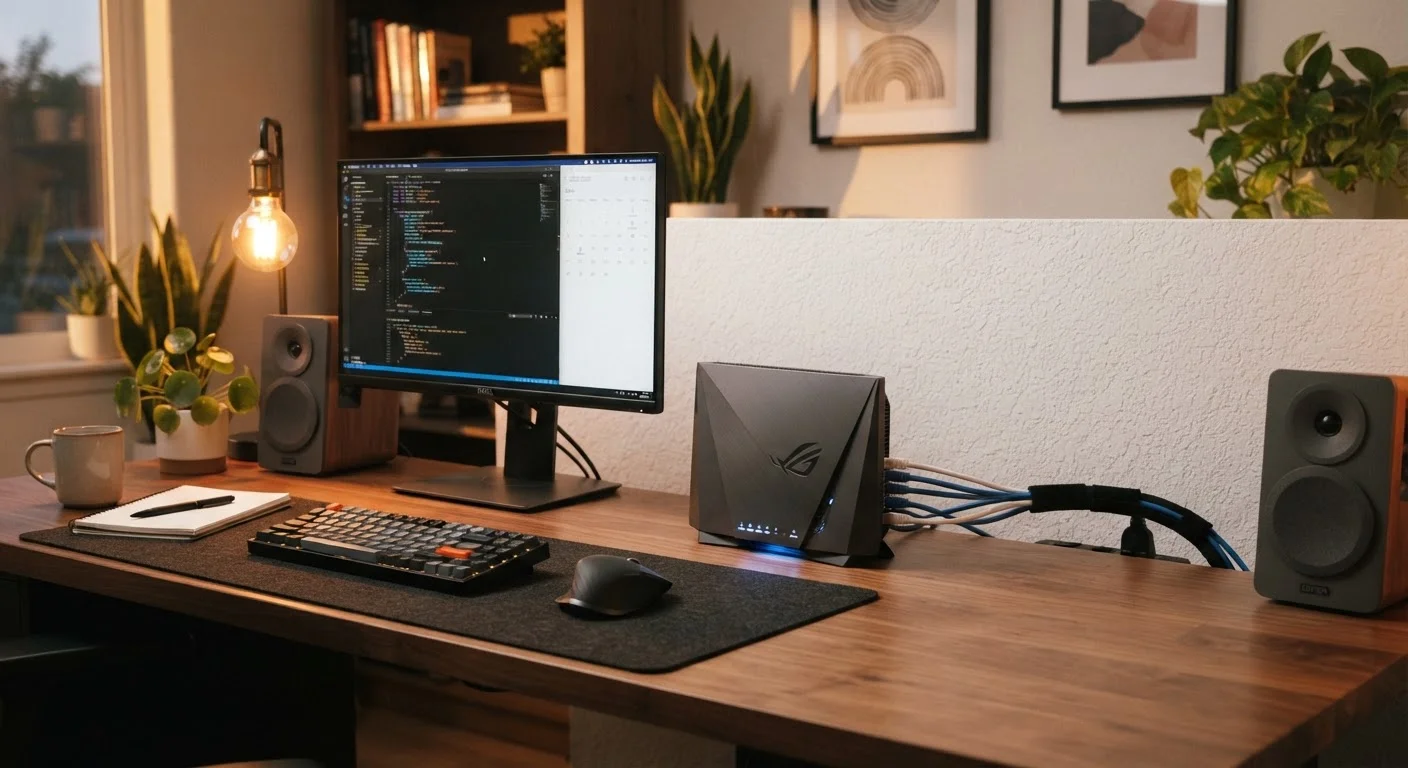
Your ISP will offer to rent you a modem and router - often combined in a single gateway device. This is convenient, but rental fees accumulate. Over two to three years, purchasing compatible equipment outright typically costs less, and you gain more control over your network settings.
Modem: Translates your ISP's signal into a usable connection. Must be compatible with your ISP and connection type - confirm compatibility before purchasing.
< strong>Router: Distributes that connection wirelessly and through ethernet ports to your devices. Router quality directly affects Wi-Fi range and reliability.
Mesh systems: Multiple nodes placed around the home create a unified Wi-Fi network. Useful for homes over roughly 2,000 square feet or layouts with thick walls and dead zones. For connected home devices, see our everyday gadgets guide for advice on managing device ecosystems.
Wi-Fi 6 (802.11ax) routers handle more simultaneous connections more efficiently than older standards - relevant for households with many smart devices.
Installation: What to Expect
Installation experience varies by connection type. Fiber often requires a technician to run new cabling to your home - plan for a multi-hour appointment window. Cable installs are typically faster if existing coaxial lines are already in place. DSL usually involves a self-install kit sent by mail.
Before the technician arrives, decide where you want your router positioned. Central placement - away from thick walls, metal appliances, and microwaves - produces better Wi-Fi coverage throughout the home.
After activation, run a speed test from a device connected directly via ethernet, not Wi-Fi. This gives you your baseline connection speed unaffected by wireless variables. If results fall significantly short of your plan's advertised speed, contact your ISP before the technician leaves.
Troubleshooting Common Problems
The majority of home internet issues resolve with a few basic steps before you need to call support.
- Reboot the modem and router: Power both off, wait 60 seconds, restart the modem first, then the router. This clears most transient errors.
- Test wired vs. wireless: Plug a laptop directly into the router with an ethernet cable. If wired speeds are fine but Wi-Fi is slow, the problem is your wireless setup, not your ISP.
- Check for outages: ISPs publish outage maps online. Confirming a neighborhood outage saves time spent troubleshooting equipment that's working correctly.
- Reposition your router: Walls, floors, and appliances absorb signal. Moving the router higher and more centrally often resolves dead zones.
- Update firmware: Router manufacturers release security and performance updates. Check your router's admin panel for pending firmware.
If problems persist after these steps, document the times and nature of the issue before calling your ISP - this log helps support agents diagnose patterns rather than offering generic advice.
Switching ISPs Without the Headache
Switching providers is straightforward in principle but requires careful sequencing to avoid service gaps or unexpected fees.
First, review your current contract for the early termination fee (ETF) - this is the dollar amount you owe if you cancel before the contract end date. Some providers waive fees under certain conditions; read the fine print or call to ask. Promotional pricing periods often lock in an ETF even when the contract language seems flexible.
Schedule your new service installation date before canceling the old one. A day or two of overlap is worth the cost to avoid going without internet during the transition. Once new service is confirmed active and tested, cancel the old account in writing and get a confirmation number.
Return rented equipment promptly and via a trackable method - ISPs routinely charge for unreturned equipment even when it was mailed back. Keep your receipt.
For households managing multiple services - internet bundled with wireless plans - see our phones and plans hub for guidance on untangling bundled contracts. Switching one service can affect the pricing of others in a bundle, so always ask your current provider for the standalone cost of each service before making a decision.
This article provides general educational information about home internet services and is not a substitute for advice tailored to your specific location, provider options, or contract terms. Verify all plan details, pricing, and availability directly with providers before making decisions.
The content on this site is provided for informational purposes only and should not be considered a substitute for professional advice. While we strive to provide accurate and up-to-date information, we make no guarantees regarding its completeness or accuracy. Always consult a qualified professional for advice specific to your circumstances before making any decisions.