

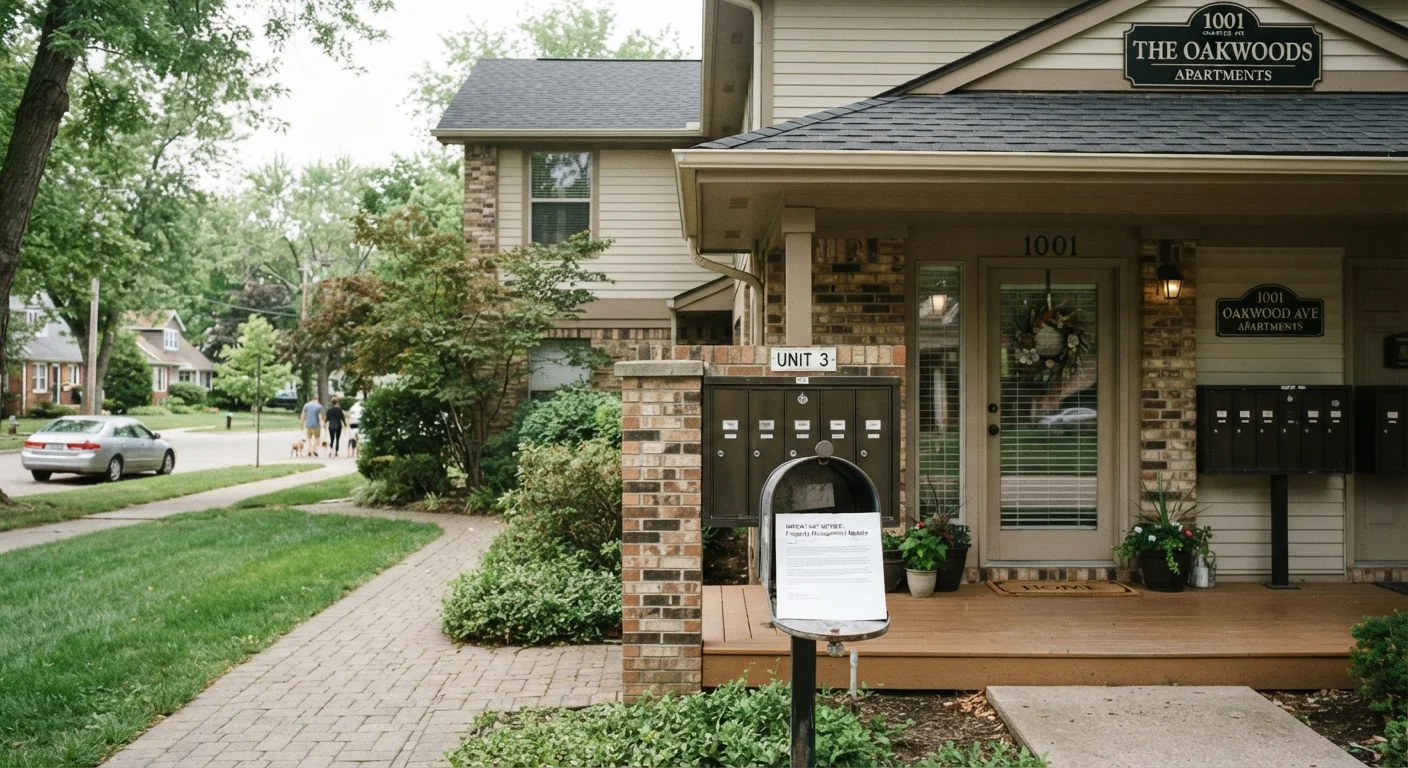
Your Lease Type Determines When Increases Are Possible
The single most important factor in whether a landlord can raise your rent is the type of rental agreement you have. There are two common arrangements: a fixed-term lease (typically 12 months) and a month-to-month agreement.
Under a fixed-term lease, your rent is contractually set for the duration of the agreement. A landlord generally cannot raise it before that term ends, unless a specific escalation clause in the lease permits it. These clauses are not standard in most residential leases and should be clearly disclosed before signing. For a plain-language breakdown of lease terminology, see our Renter's Lease Glossary.
Month-to-month tenants have less protection. Because the agreement renews each month, a landlord can propose a new rent amount with each renewal cycle - provided they give adequate notice. This flexibility for landlords is the trade-off for the flexibility tenants enjoy in shorter commitments.
Notice Requirements: What Landlords Must Do First
Even when a rent increase is legally permitted, landlords must follow proper notice procedures. The required notice period varies by state, but the most common thresholds are:
- 30 days - the minimum required in many states for month-to-month tenants
- 60 days - required in some states, particularly for larger increases
- 90 days - mandated in a handful of jurisdictions for increases above a certain percentage
Notice must typically be delivered in writing. Verbal notice of a rent increase is rarely sufficient and may not be legally binding. Tenants should keep written records of any increase notices received - including the date it arrived - as this documentation matters if a dispute arises.
30-60 days
Typical required notice before rent increase
Most US states mandate written notice of 30 to 60 days before a rent increase can take effect, though exact requirements vary by jurisdiction.
~200+
US cities with some form of rent regulation
According to the National Multifamily Housing Council, more than 200 jurisdictions across the US have enacted some form of rent control or stabilization ordinance.
~45%
US households that are renters
The US Census Bureau's American Community Survey consistently shows that roughly 44-45% of American households rent rather than own their homes.
Some states also require that the notice specify the exact new rent amount and the date it takes effect. A vague or incomplete notice may give tenants grounds to dispute the increase.
Rent Control and Rent Stabilization: Cities With Extra Rules
In certain cities and states, additional layers of law govern how much a landlord can raise rent and how often. Two terms are commonly used:
- Rent Control
- A strict cap on the maximum rent that can be charged for a unit, often tied to when the building was constructed.
- Rent Stabilization
- A more common, moderate form that allows annual increases but caps the percentage, typically linked to the local Consumer Price Index (CPI) or a fixed formula set by a housing board.
These protections are local, not federal. They exist in parts of California, New York, New Jersey, Oregon, Maryland, and Washington D.C., among others. Most American renters live in areas without any rent cap at all. Tenants should contact their local housing authority or tenant advocacy organization to confirm what rules apply in their specific city.
“Rent regulation is fundamentally a local policy choice. What's permitted in one city can be entirely prohibited in the next county over - renters need to know their specific jurisdiction's rules, not just the general principle.”
— National Housing Law Project, Nonprofit tenant advocacy and housing law organization
Increases That Are Never Legal: Retaliation and Discrimination
Even in markets without rent caps, not every rent increase is enforceable. Two categories of increases are prohibited across most jurisdictions:
Retaliatory increases occur when a landlord raises rent after a tenant has exercised a legal right - such as requesting repairs, reporting code violations, or organizing with other tenants. Most states have anti-retaliation statutes that make this illegal. If an increase arrives shortly after a complaint, tenants may have grounds to challenge it. Our guide on rights renters often overlook covers additional situations where tenants have more leverage than they realize.
Discriminatory increases - raising rent based on a tenant's race, national origin, religion, sex, familial status, or disability - violate the federal Fair Housing Act and most state equivalents. This includes using a rent increase to constructively push out a tenant belonging to a protected class.
If you suspect either type of improper increase, document everything and seek guidance from a local fair housing organization or housing attorney before taking any action.
How to Respond to a Rent Increase Notice
Receiving a rent increase notice doesn't mean you must simply accept it or move out. A measured, informed response protects your position regardless of what you decide:
- Check the notice period. Confirm the landlord gave the required advance notice for your state. If not, the increase may not be legally effective on the proposed date.
- Review local rules. Research whether your city or county has rent stabilization laws and whether the proposed increase exceeds the permitted amount.
- Respond in writing. Acknowledge receipt of the notice and note any concerns you have about its legality or the timeline. Keep a copy.
- Negotiate if appropriate. Landlords often prefer retaining reliable tenants over turnover costs. A respectful counteroffer, especially with a longer lease commitment, sometimes results in a lower increase.
- Consult a resource. Local tenant rights organizations, legal aid offices, and housing court clinics can provide jurisdiction-specific guidance at little or no cost.
This article provides general information about how rent increases work in the United States and is not a substitute for legal advice. Rental laws vary significantly by state and municipality. Consult a licensed attorney or local tenant rights organization for guidance specific to your situation.
Frequently Asked Questions
No. Most states require landlords to provide written notice - typically 30 to 60 days - before a rent increase takes effect. Some states require even longer notice for larger percentage increases. Raising rent without proper notice is generally unenforceable.
In most cases, no. A fixed-term lease locks in the rent amount for the lease period. Increases mid-lease are only permissible if the lease itself contains a specific clause allowing it, which is uncommon in standard residential agreements.
It depends on where you live. States and cities without rent control have no statutory cap on increases. Where rent control or rent stabilization laws exist, annual increases are usually capped by local ordinance. Check with your local housing authority to find out your area's rules.
A retaliatory rent increase occurs when a landlord raises rent in response to a tenant exercising a legal right - such as complaining about habitability issues or reporting code violations. This practice is illegal in most states, and tenants can often challenge it in housing court.
First, verify that the required notice period was met and that the increase complies with any local rent regulations. Respond in writing, keep a copy of all correspondence, and consult a local tenant rights organization or housing attorney if you believe the increase is improper.
No. Rent control and rent stabilization are not federal law. They exist only in specific states and municipalities, including parts of California, New York, New Jersey, Oregon, and Washington D.C. Most US cities have no such protections.
The content on this site is provided for informational purposes only and should not be considered a substitute for professional advice. While we strive to provide accurate and up-to-date information, we make no guarantees regarding its completeness or accuracy. Always consult a qualified professional for advice specific to your circumstances before making any decisions.