

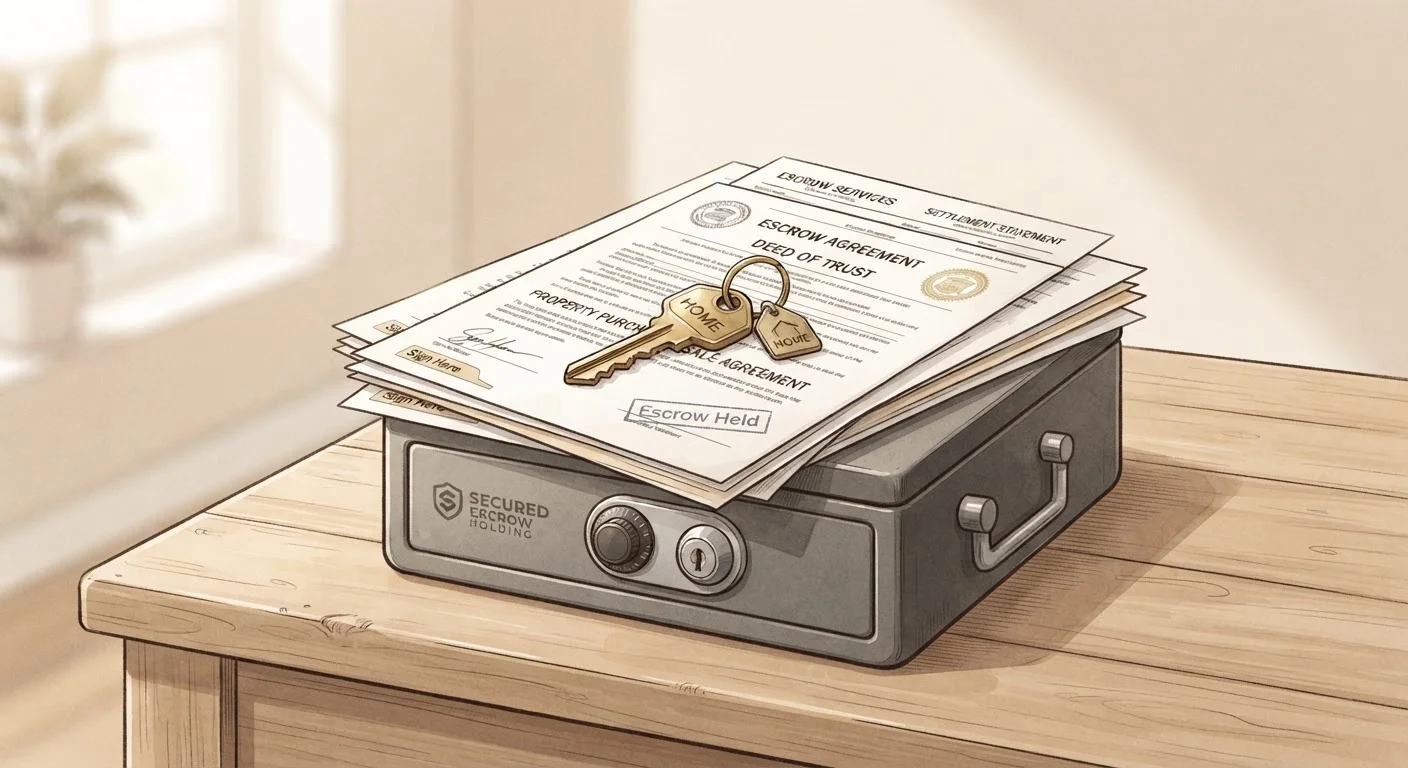
What Escrow Is - and Why It Exists
When a buyer and seller agree on a home sale, a lot has to happen before ownership actually changes hands: inspections, appraisals, title searches, final loan approval, and more. Escrow exists precisely because neither party should have to trust the other blindly during that waiting period.
In simple terms, escrow is a neutral holding arrangement managed by a disinterested third party - typically a title company, escrow company, or real estate attorney. That party holds the buyer's money and key transaction documents until every condition spelled out in the purchase agreement is satisfied. Only then does the escrow holder disburse funds to the seller and release the deed to the buyer.
For a fuller picture of where escrow fits across the entire transaction, see The Home Purchase Process, Start to Finish.
Escrow Requirements Vary by State
Real estate transactions in some states - particularly on the West Coast - are handled almost exclusively by escrow companies, while others rely more heavily on real estate attorneys to perform the same function. The underlying purpose is identical: a neutral party holds funds and documents until all conditions are satisfied. Your real estate agent or lender can tell you which approach is standard in your market.
How Escrow Works During the Purchase Transaction
The escrow period typically begins the moment a seller accepts a buyer's offer. Here's what unfolds:
- Earnest money deposit: The buyer deposits earnest money - a good-faith sum usually ranging from 1% to 3% of the purchase price - into the escrow account. This signals serious intent and gives the seller confidence the buyer won't walk away without consequence. Learn more about how those funds are handled in How Earnest Money Works in a Real Estate Transaction.
- Contingency period: Inspections, appraisals, and financing approval happen while funds sit in escrow. If a contingency isn't met - say, the home appraises below the purchase price - the buyer may be able to renegotiate or exit without losing their deposit, depending on contract terms.
- Closing funds deposited: Shortly before closing, the buyer deposits the remaining down payment and closing costs into escrow. The lender also wires the mortgage loan proceeds.
- Closing day: The escrow holder confirms all conditions are met, disburses funds to the seller, pays off any existing liens, covers closing costs, and arranges for the deed to be recorded. Escrow officially closes.
For a glossary of the terms you'll encounter in the purchase agreement itself, see Key Terms in Every Purchase Agreement, Decoded.
30-60 days
Typical escrow period for a home purchase
The length varies based on financing complexity, contingency timelines, and what's negotiated in the purchase agreement.
1%-3%
Common earnest money deposit range
Earnest money held in escrow typically equals 1% to 3% of the purchase price, though competitive markets may see higher amounts.
The Ongoing Escrow Account After Closing
Escrow doesn't necessarily end when you get the keys. Most lenders require borrowers to maintain an ongoing escrow account as part of their mortgage arrangement. Each month, a portion of your mortgage payment is deposited into this account, and the servicer uses those funds to pay your property taxes and homeowners insurance premiums when they come due.
This protects the lender's collateral - the home - by ensuring taxes and insurance are always current. For borrowers, it eliminates the risk of a large, unexpected tax bill. Servicers are required to provide an annual escrow analysis statement that shows how funds were used and whether your monthly escrow payment needs to adjust.
Some loan programs allow borrowers to waive the escrow requirement if they meet certain criteria, such as a loan-to-value ratio below a specified threshold - though lenders may charge a fee for that option. For context on how lenders and market forces shape the broader homebuying experience, see How the Housing Market Actually Works.
Review Your Annual Escrow Analysis Statement
Mortgage servicers are required to send an annual escrow analysis showing how your escrow funds were collected and spent. If your property taxes or insurance premiums increased, your monthly escrow payment will likely adjust. Reviewing this statement each year helps you anticipate changes to your total monthly housing cost.
Common Escrow Misunderstandings
A few points buyers frequently get wrong:
- Escrow is not a bank account you control. You cannot withdraw funds from escrow on your own. The escrow holder acts strictly on the terms of the agreement.
- Escrow fees are real closing costs. The escrow company charges for its services, and those fees - typically split between buyer and seller based on local convention - appear on your Closing Disclosure.
- Escrow closing and deed recording are related but distinct steps. The deed is typically recorded with the county after all funds are disbursed, which legally completes the transfer of ownership.
Understanding escrow is one piece of a broader real estate vocabulary. Key Real Estate Terms Every Buyer and Seller Should Know covers many of the other terms you'll encounter throughout the process.
Frequently Asked Questions
Neither the buyer nor the seller controls escrow funds. A neutral third party - typically a title company, escrow company, or attorney - holds the money and disburses it only when all agreed conditions are met. This protects both sides from the other party accessing funds prematurely.
The escrow period typically lasts 30 to 60 days, though it can be shorter or longer depending on what's negotiated in the purchase agreement. Factors like financing timelines, inspections, and appraisals can affect how quickly escrow closes.
Yes. If a buyer or seller fails to meet the terms of the purchase agreement - for instance, if financing falls apart or a contingency isn't resolved - escrow may not close. What happens to the earnest money in that situation depends on the specific contract terms.
No. The escrow account used during the purchase transaction is separate from the ongoing escrow account a mortgage servicer manages after closing. The post-closing account collects a portion of your monthly payment to cover property taxes and homeowners insurance.
Escrow fees are part of closing costs and are typically split between buyer and seller, though the exact arrangement is negotiable and varies by local custom. Fee amounts depend on the escrow company and the sale price of the home.
Even in all-cash transactions, using an escrow arrangement is strongly advisable because it protects both parties until all documents are exchanged and recorded. Without it, one party could be exposed to significant financial risk if the other fails to follow through.
The content on this site is provided for informational purposes only and should not be considered a substitute for professional advice. While we strive to provide accurate and up-to-date information, we make no guarantees regarding its completeness or accuracy. Always consult a qualified professional for advice specific to your circumstances before making any decisions.