

Ambition Has Its Limits
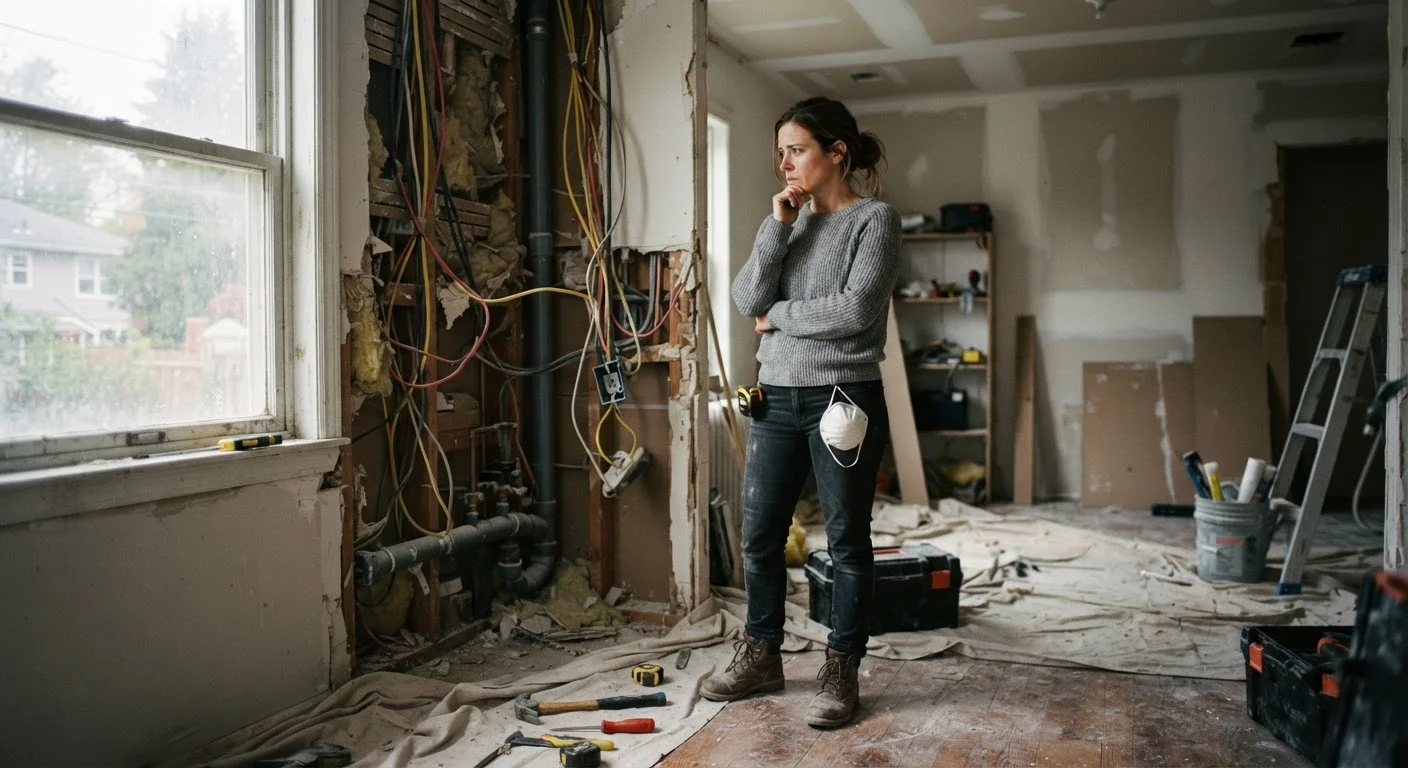
There's real satisfaction in fixing something yourself - patching drywall, painting a room, swapping out a faucet. But home repair confidence can quietly outpace actual skill, and the consequences of misjudging that line range from cosmetic disappointment to genuine danger. The goal isn't to discourage hands-on homeownership; it's to help you read the signals that tell you when a project needs a licensed set of hands.
Before starting any significant project, it also pays to understand what you're working with. If you're newer to the home, the home condition checklist can help you identify potential problem areas before they become emergencies. And if you're planning a larger renovation sequence, running through a room-by-room readiness checklist before demo day is a smart way to stay organized and safe.
The signs below aren't meant to intimidate - they're meant to protect your time, your wallet, and your home.
The work involves your home's electrical panel or wiring
Replacing a light switch is generally manageable for a careful DIYer who cuts power at the breaker first. But anything touching your main electrical panel, adding new circuits, or rewiring rooms is a different matter entirely. In most U.S. jurisdictions, this work requires a licensed electrician and a permit - and for good reason. Improper wiring is one of the leading causes of residential fires.
Signs you've hit this threshold: flickering lights across multiple rooms, breakers that trip frequently, outlets that feel warm, or any burning smell near outlets or the panel. These symptoms point to systemic issues, not a quick swap.
Anything touching your electrical panel or adding circuits requires a licensed electrician and permit.
Gas lines are involved in any way
There is essentially no safe DIY category when it comes to gas lines, gas appliance connections, or anything that requires breaking into a gas supply. Even a small leak creates explosion and carbon monoxide risks. Licensed plumbers or gas fitters have the equipment to pressure-test lines and verify safe connections - no tutorial substitutes for that.
If you ever smell gas in your home, leave immediately without flipping switches or using your phone indoors, then call your gas utility's emergency line from outside.
Gas lines have essentially no safe DIY category - always hire a licensed professional.
Structural elements are damaged or altered
Load-bearing walls, roof trusses, foundation cracks, and floor joists all carry the weight of your home - literally. Removing or modifying any of these without engineering guidance can compromise structural integrity in ways that aren't immediately visible. Sagging floors, doors that no longer close squarely, and cracks that run diagonally across walls or follow mortar lines in brick are warning signs that something structural may need professional evaluation.
Even cosmetic fixes over structural damage - patching a crack in drywall without understanding what caused it - can mask a worsening problem.
Sagging floors and diagonal wall cracks may signal structural issues that need professional evaluation.
Water damage extends beyond the visible surface
A slow leak under a sink that's caught quickly might be a simple supply-line fix. But when water stains appear on ceilings, walls show bubbling paint, or a musty odor persists despite cleaning, the damage has likely spread beyond the surface. Mold can develop inside wall cavities within 24-48 hours of moisture exposure.
Improper mold remediation can spread spores further. If the affected area is larger than roughly 10 square feet, the EPA generally recommends professional remediation. Any time structural components - sheathing, joists, subflooring - show water damage, a professional assessment is the safer path.
Musty odors and water stains on ceilings often mean hidden damage that goes well beyond the surface.
The job requires a permit you're not sure how to navigate
Many homeowners don't realize that unpermitted work can create serious problems when they sell the home, file an insurance claim, or need work inspected later. Permits exist to ensure work meets safety codes - they're not just bureaucratic friction.
If a project requires a permit (additions, significant electrical or plumbing changes, HVAC replacement, fence installation in many municipalities), but you're unsure of the process, that uncertainty itself is a signal. Licensed contractors handle permit applications routinely; attempting regulated work without permits can result in fines, required tear-outs, and insurance complications.
Unpermitted work can create insurance, inspection, and resale problems that far outweigh the initial savings.
You don't have the right tools - and renting them isn't straightforward
Some jobs require specialized tools that aren't just expensive but genuinely dangerous without training: pipe threading equipment, concrete saws, mast climbing equipment for roofwork, or drain cameras for diagnosing sewer line issues. If doing a job correctly requires equipment you've never used and can't easily learn in a day, factor that honestly into your go/no-go decision.
Tool rental is a reasonable option for many projects, but if the tool itself has a significant learning curve or requires safety certifications, the professional who uses it daily is the safer and often more cost-effective choice.
If the job requires specialized tools with a steep learning curve, the professional who uses them daily is likely the better choice.
When to Make the Call
Recognizing the threshold is only half the work. Once you've identified a job that exceeds DIY limits, acting promptly matters. Delaying professional repairs - especially for water intrusion, structural issues, or electrical faults - typically makes the problem larger and more expensive.
Get a Professional Assessment First
If you're unsure whether a job crosses the DIY line, many licensed contractors offer diagnostic visits or estimates at low or no cost. A brief consultation can confirm whether you can safely proceed yourself, clarify what a professional repair actually involves, and give you a cost baseline - all before you commit to either path.
The same logic applies across different types of projects. Just as some car maintenance tasks carry real risk when attempted without the right knowledge, home repairs in regulated trades deserve the same honest self-assessment. Knowing your limits isn't a failure - it's smart stewardship of the home you've invested in.
The content on this site is provided for informational purposes only and should not be considered a substitute for professional advice. While we strive to provide accurate and up-to-date information, we make no guarantees regarding its completeness or accuracy. Always consult a qualified professional for advice specific to your circumstances before making any decisions.