

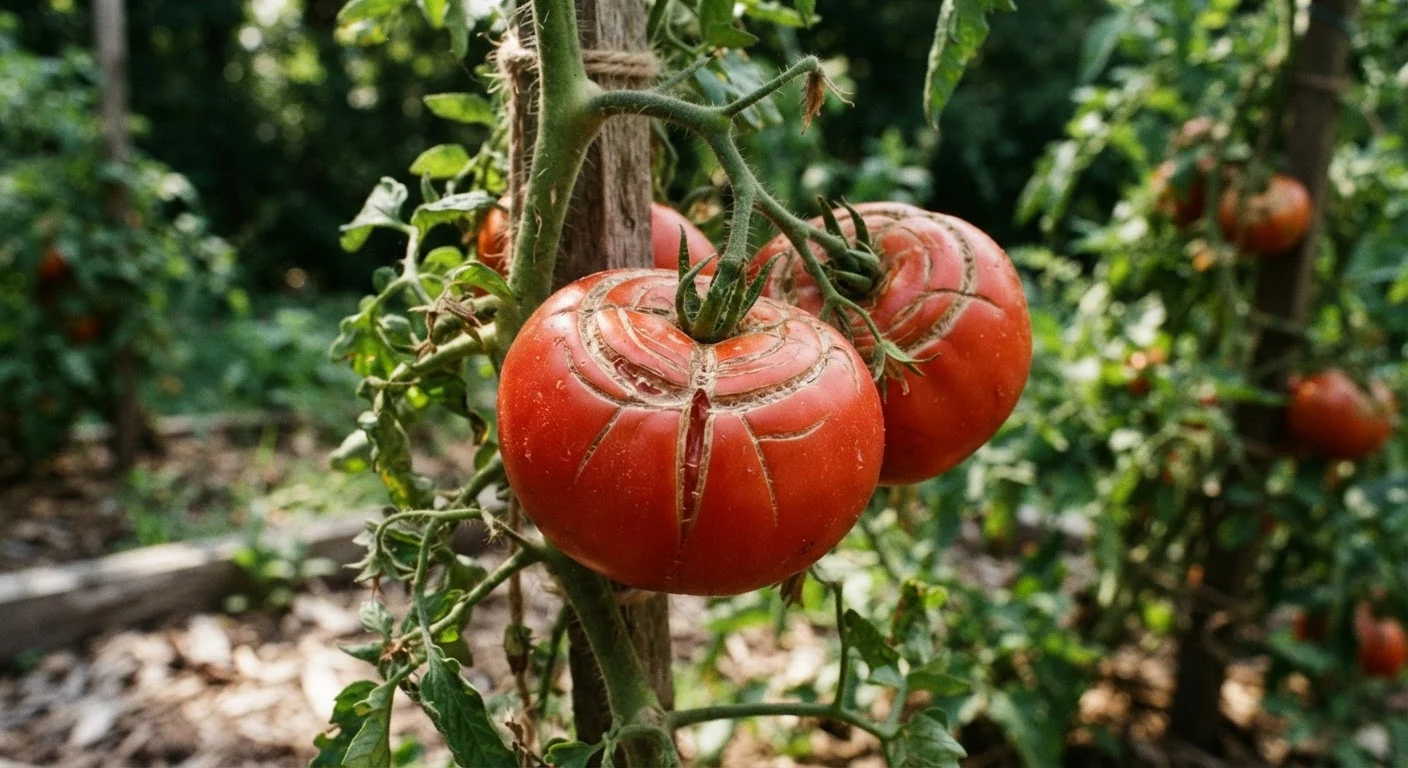
What's Actually Happening When Tomatoes Crack
Tomato cracking - sometimes called splitting - comes in two forms. Radial cracks run from the stem down toward the blossom end, while concentric cracks form rings around the top of the fruit. Both happen for the same fundamental reason: the inside of the tomato grows faster than the outer skin can stretch.
When a tomato absorbs a sudden surge of water - after a dry spell, a heavy rain, or an inconsistent watering schedule - the flesh expands rapidly. The skin, which has toughened during dry conditions, simply can't keep pace. The result is a split that leaves fruit vulnerable to rot, pests, and disease. Understanding this mechanism is the first step to stopping it.
Common Mistakes That Lead to Cracking
Most cracking problems trace back to a handful of avoidable errors in care and garden management. Recognizing which mistake applies to your situation makes it much easier to correct.
Watering irregularly - long dry periods followed by deep soakings.
Why it happens: Many gardeners water only when they notice the soil looking dry or plants wilting, which creates unpredictable wet-dry cycles.
Skipping mulch around the base of tomato plants.
Why it happens: Mulching can feel like an extra step, and many gardeners underestimate how dramatically it stabilizes soil moisture.
Over-fertilizing with high-nitrogen products during fruiting.
Why it happens: Nitrogen encourages lush green growth, so gardeners often continue heavy feeding throughout the season without realizing it shifts the plant's energy away from balanced fruit development.
Leaving fruit on the vine too long through weather extremes.
Why it happens: Gardeners naturally want tomatoes to reach peak ripeness on the plant, but extended vine time increases exposure to temperature swings and rainfall.
Planting crack-prone varieties without adjusting care practices.
Why it happens: Large heirloom and beefsteak-type tomatoes are beloved for flavor, but their thin skins make them far more susceptible to splitting than hybrid or cherry types.
1-2"
Recommended weekly water for tomatoes
University cooperative extension programs across the U.S. consistently recommend 1-2 inches of water per week as the baseline for healthy tomato production.
2-3"
Mulch depth that stabilizes soil moisture
Garden research and horticultural guidance broadly supports a 2-3 inch mulch layer as effective at reducing soil moisture evaporation between waterings.
Soil, Variety, and Timing: The Bigger Picture
Even with perfect watering habits, other factors can push your tomatoes toward cracking. Soil that drains poorly - or compacts heavily between waterings - causes roots to experience feast-or-famine moisture conditions even when you're watering on a schedule. Amending clay-heavy soil with compost improves drainage and helps moisture reach roots more gradually and evenly.
Variety selection also matters more than many gardeners realize. Thin-skinned varieties like large heirlooms are significantly more prone to cracking than thicker-skinned types. If cracking is a recurring problem in your garden, look for varieties described as crack-resistant when selecting seeds or transplants.
Timing your harvest is a simple but effective last line of defense. Tomatoes don't need to be fully red on the vine to ripen well. Once they reach the breaker stage - when the first blush of color appears - they can be brought indoors to finish ripening at room temperature. This removes them from the weather and watering variability that cause splitting.
Don't Eat Deeply Cracked or Rotting Fruit
Shallow cracks that appear and dry quickly are generally safe to eat if the flesh beneath is firm and you remove the affected skin. However, deep splits that expose interior flesh are entry points for mold, bacteria, and insects. Discard any fruit showing soft spots, foul odor, or visible mold - these are signs of decay, not just cosmetic damage.
The content on this site is provided for informational purposes only and should not be considered a substitute for professional advice. While we strive to provide accurate and up-to-date information, we make no guarantees regarding its completeness or accuracy. Always consult a qualified professional for advice specific to your circumstances before making any decisions.