

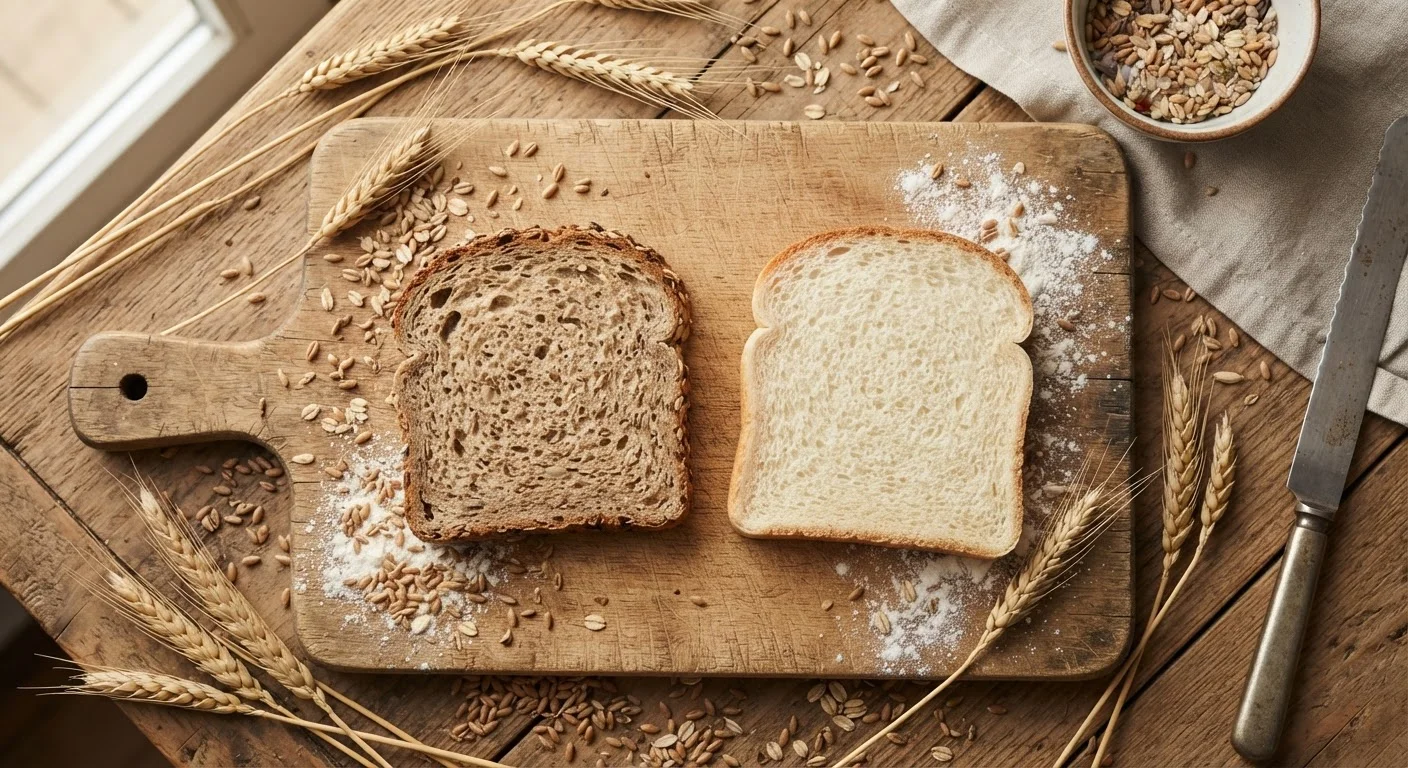
Option A
Whole Grains
The complete, minimally processed grain option.
Best for: People looking to boost fiber intake, support blood sugar stability, and get more vitamins and minerals from everyday foods.
Option B
Refined Grains
The processed, widely available grain choice.
Best for: Situations requiring longer shelf life, softer texture, or specific culinary applications - though they contribute less nutritional density.
What the Milling Process Actually Does
A grain kernel has three distinct parts: the bran (outer layer), the germ (inner seed), and the endosperm (starchy center). Whole grains preserve all three. Refined grains are milled to remove the bran and germ, leaving primarily the endosperm.
This is not a trivial change. The bran supplies the majority of the grain's fiber and many B vitamins. The germ contributes vitamin E, healthy fats, and additional B vitamins. The endosperm, which refining keeps, is mostly starch with relatively modest nutritional value on its own.
The result is a product that is softer, lighter, and longer-lasting on store shelves - but with a considerably reduced nutrient profile. To address this, many refined grain products in the U.S. are enriched, meaning specific B vitamins (thiamin, riboflavin, niacin, and folic acid) and iron are added back. However, enrichment does not restore fiber, vitamin E, magnesium, zinc, or the various phytonutrients lost during milling.
| Criterion | Whole Grains | Refined Grains |
|---|---|---|
| Parts retained | Bran, germ, endosperm | Endosperm only |
| Fiber content | High | Low (mostly removed) |
| B vitamins (natural) | Naturally present | Mostly removed; some added back |
| Vitamin E | Present (from germ) | Largely absent |
| Magnesium & zinc | Good natural source | Significantly reduced |
| Blood sugar impact | More gradual rise | Faster rise (lower fiber) |
| Shelf life | Shorter (germ fats can oxidize) | Longer |
| Texture | Denser, heartier | Lighter, softer |
Blood Sugar, Fiber, and Why It Matters
One of the most practically important differences between whole and refined grains is how each affects blood glucose. Fiber - found almost exclusively in the bran layer - slows the breakdown and absorption of carbohydrates. When fiber is removed, starch digests more rapidly, causing a faster rise in blood sugar and a corresponding insulin response.
Research published in nutrition journals has consistently linked higher whole grain consumption with improved glycemic control and reduced risk of type 2 diabetes over time, though these associations come from large population studies and do not guarantee individual outcomes. For people already managing blood sugar conditions, grain choices can be meaningfully relevant - and warrant a conversation with a qualified healthcare professional.
Understanding fiber's broader role in digestive health, cardiovascular function, and satiety is worth exploring further. Learn more about why fiber is so widely under-consumed and how everyday food swaps can help close that gap.
A Note on Enrichment vs. Whole Grain
"Enriched" on a grain product label means certain nutrients removed during milling have been added back - typically four B vitamins and iron. While enrichment improves on the stripped-down product, it does not replicate the full nutritional complexity of an intact whole grain. Fiber, vitamin E, magnesium, and a range of phytonutrients are generally not restored through enrichment.
Practical Steps Toward More Whole Grains
Switching from refined to whole grains does not have to be an all-or-nothing effort. Small, consistent substitutions - whole wheat bread instead of white, brown rice instead of white, oats instead of refined breakfast cereals - can accumulate into meaningful nutritional gains over time.
When reading food labels, look for the word "whole" as the first ingredient (e.g., "whole wheat flour" or "whole oat flour"). Terms like "multigrain," "stone-ground," or "wheat flour" do not necessarily indicate a whole grain product. The ingredient list is more reliable than front-of-package claims.
Common whole grain options include oats, brown rice, whole wheat, quinoa, barley, bulgur, and farro. Each brings a slightly different nutrient profile and culinary character, so variety is both achievable and beneficial.
This article is for general informational and educational purposes only and does not constitute medical or dietary advice. Consult a registered dietitian or qualified healthcare professional for guidance tailored to your individual health needs.
The content on this site is provided for informational purposes only and should not be considered a substitute for professional advice. While we strive to provide accurate and up-to-date information, we make no guarantees regarding its completeness or accuracy. Always consult a qualified professional for advice specific to your circumstances before making any decisions.