

Why Mental Health Language Matters
Conversations about mental health are happening more openly than ever - in workplaces, on social media, and in primary care offices. But a lack of shared vocabulary can slow those conversations down or lead to misunderstanding. Knowing what a term actually means can be the difference between feeling informed and feeling lost.
This reference is designed for everyday readers, not clinicians. Whether you've just started therapy, are supporting a loved one, or simply want to understand what you're reading, the definitions below are meant to be clear and practical. For a complementary introduction to mental health concepts, see our guide to mental wellbeing from the ground up.
This Is Educational Information, Not Medical Advice
The definitions and explanations in this article are intended for general understanding. They are not a substitute for professional diagnosis, clinical assessment, or personalized mental health treatment. If you or someone you know is struggling, please speak with a qualified healthcare provider.
Core Diagnostic and Clinical Terms
Mental health care involves its own professional vocabulary, much of which originates in clinical settings. These terms appear frequently in conversations with providers, in diagnostic paperwork, and in general health media.
Diagnosis refers to the formal identification of a mental health condition by a licensed professional, typically based on criteria from the DSM-5 - the standard reference used across the U.S. A diagnosis does not define a person; it helps guide treatment decisions. Comorbidity is especially worth knowing: many people carry more than one diagnosis simultaneously, which is common and does not mean a situation is untreatable.
If you're sorting out what kind of professional handles which type of care, our article on therapy, counseling, and psychiatry explains those distinctions in plain language.
Everyday Terms Worth Knowing
Beyond clinical language, a number of terms show up in popular wellness discussions that deserve accurate definitions.
| Adults affected by mental illness in the U.S. | About 1 in 5 per year (National Institute of Mental Health (NIMH)) |
| Most common mental health condition | Anxiety disorders (NIMH and WHO data) |
| Average delay from symptom onset to treatment | 11 years (NAMI (National Alliance on Mental Illness)) |
| Types of psychotherapy in common use | Over 50 recognized approaches (American Psychological Association) |
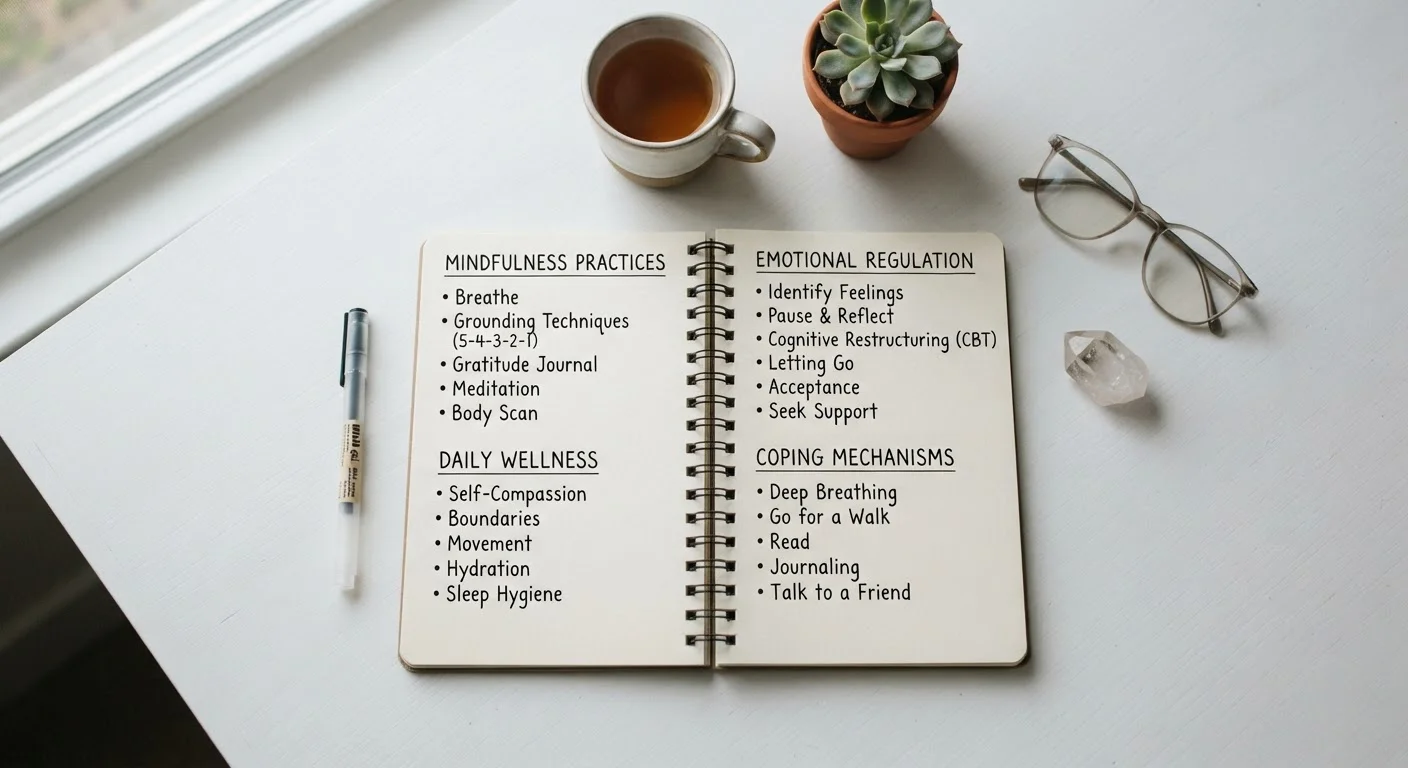
Mindfulness describes the practice of paying deliberate, non-judgmental attention to the present moment. It is a component of several evidence-based therapies but is also used more broadly in everyday stress management. Burnout refers to a state of chronic exhaustion - physical, emotional, and cognitive - typically linked to prolonged stress in work or caregiving roles. It is not a formal DSM diagnosis, but it is widely recognized by health professionals.
Gaslighting has become a commonly used term, referring to a pattern of manipulation in which one person causes another to doubt their own perceptions or memory. Emotional regulation describes the ability to manage and respond to emotional experiences in healthy, adaptive ways - a skill that can be developed with practice or therapeutic support.
For a look at how misconceptions about mental health continue to affect people's decisions, see what the evidence says about common mental health myths.
This article provides general educational information about mental health terminology and is not a substitute for professional medical or psychological advice. Always consult a qualified healthcare provider for questions about your mental health or that of someone you care for.
The content on this site is provided for informational purposes only and should not be considered a substitute for professional advice. While we strive to provide accurate and up-to-date information, we make no guarantees regarding its completeness or accuracy. Always consult a qualified professional for advice specific to your circumstances before making any decisions.