

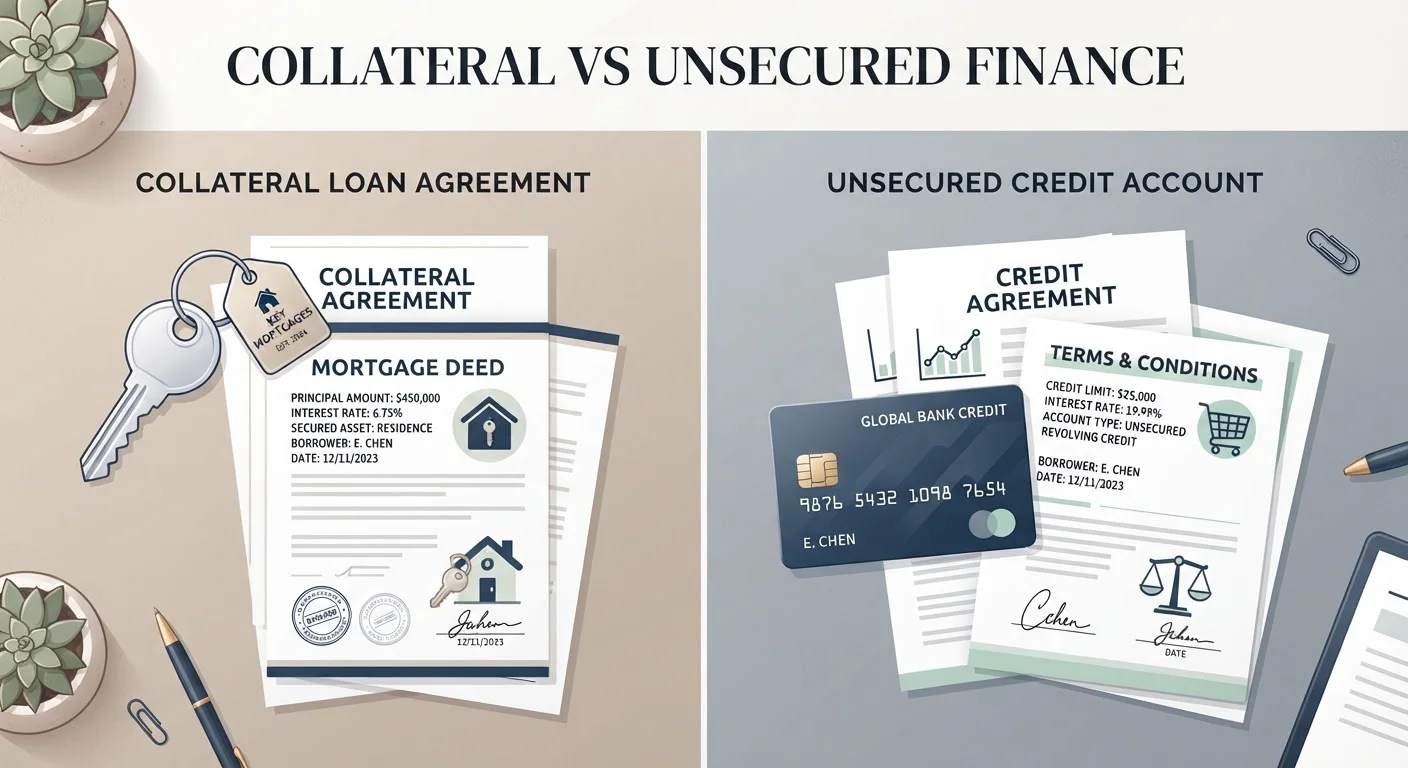
Option A
Secured Debt
The collateral-backed obligation with higher stakes.
Best for: Borrowers who need access to larger loan amounts at lower interest rates and are comfortable pledging an asset as collateral.
Option B
Unsecured Debt
The flexible, asset-free obligation with higher costs.
Best for: Borrowers seeking credit without pledging assets, typically for everyday expenses, emergencies, or smaller purchases.
What Makes Debt Secured or Unsecured
The single defining difference between secured and unsecured debt is collateral - a specific asset pledged to the lender as a guarantee of repayment. With secured debt, the lender holds a legal claim (called a lien) on that asset. If you stop paying, the lender can take the asset to recover what they're owed. Common examples include mortgages (secured by your home) and auto loans (secured by your vehicle).
Unsecured debt, by contrast, involves no pledged asset. The lender extends credit based on your creditworthiness - your credit score, income, and repayment history - without attaching a claim to any specific property. Credit cards, personal loans, medical bills, and student loans are typical examples. Because the lender has no immediate fallback, unsecured debt carries more risk for them, which is reflected in higher interest rates for borrowers.
This structural difference isn't just technical - it shapes everything from the interest rate you're offered to what happens when payments stop.
What Happens When You Default
Default consequences diverge sharply depending on debt type.
With secured debt, default gives the lender the right to repossess or foreclose on the collateral. A mortgage lender can begin foreclosure proceedings. An auto lender can repossess your vehicle, often with little advance notice depending on your state's laws. The lender's goal is to recover the asset and sell it - if the sale doesn't cover the full balance owed, you may still be liable for the remaining amount, called a deficiency balance.
With unsecured debt, the lender has no collateral to claim. Instead, the consequences unfold differently: the account is reported delinquent, your credit score drops, the debt may be sold to a collection agency, and - if the lender pursues legal action - a court judgment could lead to wage garnishment or bank account levies. These are serious consequences, but they don't directly threaten a specific asset you own.
| Criterion | Secured Debt | Unsecured Debt |
|---|---|---|
| Collateral required | Yes - specific asset pledged | No - based on creditworthiness |
| Typical interest rates | Lower (lender has less risk) | Higher (lender has more risk) |
| Default consequence | Repossession or foreclosure | Collections, potential court judgment |
| Lender negotiation leverage | High - holds lien on asset | Lower - no direct asset claim |
| Common examples | Mortgage, auto loan | Credit card, personal loan, medical bill |
| Bankruptcy treatment | Tied to collateral; lien may survive | Often dischargeable in Chapter 7 |
Understanding these paths matters when you're deciding how to allocate limited funds. Balancing debt repayment with saving becomes more strategic once you recognize that not all debt defaults carry the same immediate risk.
Negotiation, Strategy, and Your Options
The type of debt you carry also shapes your leverage - and your options - when financial hardship hits.
Secured creditors generally have more power: they hold the lien on your property, and time is often on their side. That said, many mortgage servicers offer forbearance programs or loan modification options to avoid the cost of foreclosure. It's worth contacting your lender early if you're struggling.
Unsecured creditors, lacking collateral, frequently have more motivation to negotiate. Credit card issuers, medical providers, and personal loan lenders may agree to reduced settlement amounts, hardship payment plans, or temporary interest rate reductions - particularly if the alternative is a costly collections process.
Student Loans: A Special Case
Federal student loans are technically unsecured but behave differently from most unsecured debt. They are generally not dischargeable in bankruptcy except under very narrow hardship conditions, and the federal government has collection powers - including garnishing tax refunds and Social Security benefits - without needing a court judgment. If student loans are part of your debt picture, they warrant separate consideration from typical unsecured obligations.
Bankruptcy is another dimension where this distinction becomes critical. Secured and unsecured debts are treated differently under Chapter 7 and Chapter 13 filings. For a detailed breakdown, see what happens to debt in bankruptcy.
This article is for general informational purposes only and does not constitute personalized financial, legal, or tax advice. For guidance specific to your situation, consult a qualified financial adviser or licensed attorney.
The content on this site is provided for informational purposes only and should not be considered a substitute for professional advice. While we strive to provide accurate and up-to-date information, we make no guarantees regarding its completeness or accuracy. Always consult a qualified professional for advice specific to your circumstances before making any decisions.