

Our Verdict
Battery failure is the most frequent culprit and the easiest to confirm at home, while alternator problems disguise themselves as recurring battery issues. Starter failure is the least common of the three but is almost always the diagnosis when everything else checks out. Knowing which symptoms belong to which component saves time, money, and the frustration of replacing the wrong part.
| Best for | Recommended |
|---|---|
| Drivers who hear rapid clicking when turning the key | Battery |
| Drivers whose battery keeps dying despite recent replacement | Alternator |
| Drivers who hear one loud click but the engine won't crank | Starter |
| Drivers experiencing dimming lights while driving at speed | Alternator |
How Each Component Fits Into the Starting System
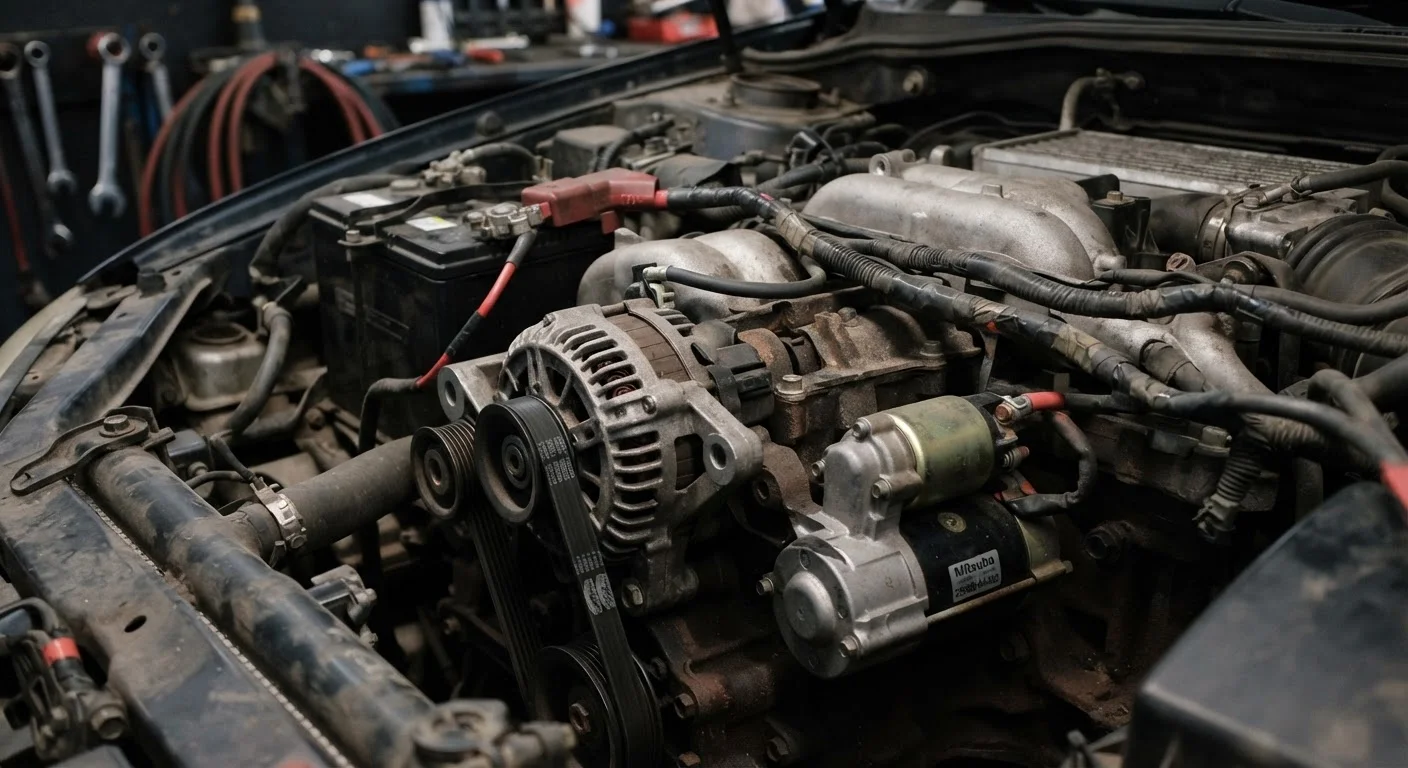
Your car's electrical starting system relies on three interdependent parts working in sequence. Understanding each role makes diagnosis far more logical.
- Battery: Stores electrical energy and provides the burst of power needed to crank the engine. It also powers accessories when the engine is off.
- Alternator: Driven by the engine's serpentine belt, it recharges the battery while the engine runs and powers the car's electrical systems during operation.
- Starter motor: An electric motor that physically turns the engine over so combustion can begin. It draws power directly from the battery.
These three components form a chain. A weak battery can't power the starter. A failing alternator drains the battery. A dead starter leaves a healthy battery with nowhere to send its charge. If you're new to thinking about your car's systems, the practical primer for new owners is a solid starting point.
Reading the Symptoms: What Your Car Is Telling You
The most useful diagnostic tool you already have: your ears and eyes. Each component tends to fail in recognizable patterns.
| Battery | Alternator | Starter | |
|---|---|---|---|
| Primary symptom | Rapid clicking or no power | Lights dim, battery keeps dying | Single click or silence, lights normal |
| When it typically fails | Cold weather, age (3-5 yrs) | High mileage, belt wear | High mileage, heat exposure |
| Home test available | Yes - multimeter voltage check | Yes - check charging voltage | Partial - listen for click pattern |
| Diagnosis difficulty | Low | Moderate | Moderate to high |
| Risk if ignored | Stranded vehicle | Drains battery, full electrical failure | Vehicle completely inoperable |
| Professional testing needed | Load test confirms weakness | Output and diode testing | Bench test or circuit analysis |
Battery Warning Signs
A battery warning typically shows up as slow cranking, a clicking sound when you turn the key, or a completely dead vehicle with no dashboard lights. Cold weather accelerates battery decline - a battery that seems fine in summer may fail in winter. Batteries generally last three to five years under normal conditions.
Alternator Warning Signs
Alternator problems are trickier because a failing alternator slowly starves the battery rather than failing outright. Watch for dashboard warning lights (often a battery icon), dimming headlights especially at idle, electrical accessories behaving erratically, or a battery that needs frequent jump-starts even though it's relatively new.
Starter Warning Signs
A failing starter is distinctive. You'll often hear a single loud click - not rapid clicking - when turning the key, or total silence despite the dashboard lighting up normally. Sometimes a starter will work intermittently before failing completely. Heat can also cause a starter to fail temporarily, meaning the car won't start when the engine is hot but will once it cools.
Keep a Record of Electrical Symptoms
Note exactly when unusual symptoms occur - time of day, temperature, engine state (hot or cold), and what the car did or didn't do. This log is genuinely useful to a mechanic and can shorten diagnostic time considerably. Intermittent electrical faults are notoriously difficult to reproduce in a shop, so your observations become part of the diagnostic process.
Simple Tests You Can Do at Home
You don't need a garage full of equipment to narrow down the problem. A basic multimeter (an inexpensive voltage-measuring device available at any auto parts store) covers most of what you need.
- Test the battery voltage: With the engine off, a healthy battery reads approximately 12.4-12.7 volts. Below 12.0 volts suggests a discharged or failing battery.
- Test charging voltage: Start the engine and recheck the battery terminals. The alternator should be producing 13.7-14.7 volts. A reading outside that range points to alternator trouble.
- Listen carefully during a start attempt: Rapid clicking = low battery power. One click + no crank = likely starter. Silence with normal dash lights = starter or wiring. Slow, labored cranking = weak battery or poor connections.
- Check the connections: Before assuming any component is bad, inspect battery terminals for corrosion (a white or bluish powdery buildup). Loose or corroded connections mimic battery and starter failure.
If your multimeter readings look normal and connections are clean, the problem likely lies in a component that requires professional testing equipment to evaluate fully - which is when a qualified mechanic should take over.
~80%
No-start calls traced to battery
Industry roadside assistance data consistently shows the battery as the leading cause of vehicle no-starts and service calls.
3-5 years
Average car battery lifespan
Most automotive authorities, including AAA, cite three to five years as the typical service life for a standard lead-acid battery under normal conditions.
When to Call a Mechanic
Home testing can point you toward the right component, but some situations call for professional diagnosis. Bring your vehicle to a mechanic if:
- Your battery tests fine but dies repeatedly within days of charging.
- Voltage readings are within range yet the car still won't start reliably.
- You notice burning smells, melted wiring, or any sign of an electrical short.
- The starter intermittently works - this can make the problem harder to reproduce but doesn't make it less real.
Most auto parts retailers also offer free battery and alternator load testing in their parking lots, which goes beyond what a basic voltage check reveals. A load test stresses the battery under simulated starting conditions, exposing weakness that resting voltage measurements may miss. Use these services before buying any replacement part - they can save you from replacing a good battery when the alternator is actually at fault.
Electrical problems can cascade quickly. A failing alternator left unaddressed will eventually discharge even a brand-new battery, turning a single-component repair into a more expensive two-part job.
The content on this site is provided for informational purposes only and should not be considered a substitute for professional advice. While we strive to provide accurate and up-to-date information, we make no guarantees regarding its completeness or accuracy. Always consult a qualified professional for advice specific to your circumstances before making any decisions.