

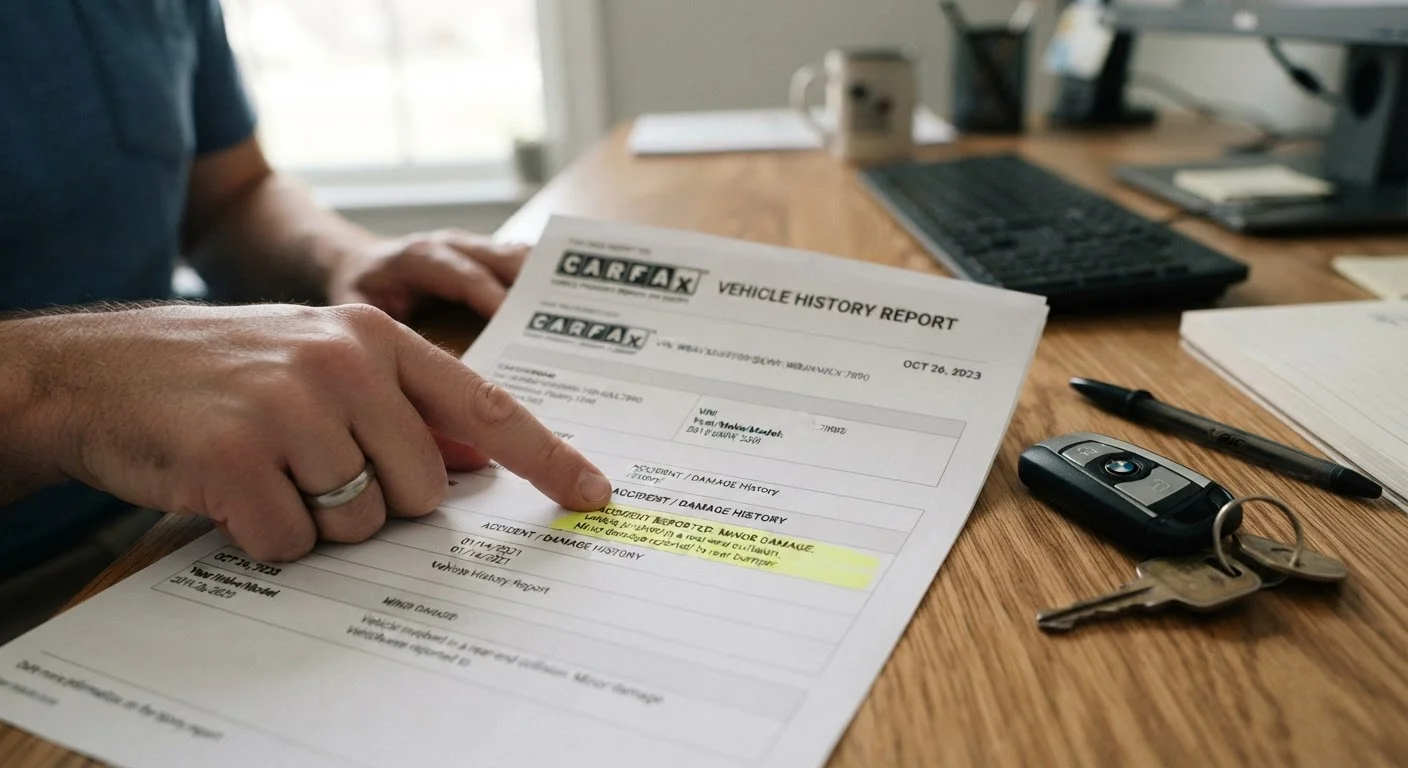
Why Vehicle History Reports Matter - and What They Can't Do
A vehicle history report aggregates data from state DMV records, insurance companies, auto auctions, and repair facilities into a single timeline tied to a vehicle's VIN. For any used car purchase, it is an essential starting point - not a finish line. The report can confirm title status, flag odometer fraud, document major accidents, and reveal usage patterns that a test drive alone would never expose.
That said, understanding the report's limitations is equally important. Private-party cash repairs, unreported fender-benders, and service done at shops that don't submit data to national databases will leave no trace. Think of the report as a paper trail for what was officially recorded - not a comprehensive account of everything the vehicle ever experienced.
For first-time buyers especially, knowing how to read this document systematically prevents the most common mistake: skimming for obvious red flags while missing subtler warning signs buried in the timeline. If you're just starting the used-car buying process, our first-time buyer's orientation covers the broader landscape before you reach the report stage.
A Clean Report Is Not a Guarantee
Vehicle history reports rely on data reported to insurance companies, state DMVs, and repair facilities. Unreported accidents, private-party repairs, and cash transactions may never appear. Always follow up a history report with a professional pre-purchase inspection before finalizing any purchase.
How to Read Each Section - Step by Step
Vehicle history reports follow a broadly consistent format across major reporting services, though layout and terminology vary. The steps below walk you through each substantive section in the order most reports present them. Gather your VIN and the report in front of you before beginning.
What you will need
Vehicle Identification Number (VIN)
Used to pull the specific vehicle's complete history from reporting databases.
Vehicle history report service
Aggregates DMV, insurance, and service records into a readable timeline for one specific vehicle.
Notepad or digital document
Record any red flags or questions to bring to the seller or your mechanic.
Locate and Verify the VIN
Before pulling a report, confirm the VIN is consistent across multiple locations on the vehicle: the dashboard plate (visible through the windshield on the driver's side), the driver's door jamb sticker, and the title document. A mismatch between any of these locations is a serious red flag for possible theft or fraud. The VIN is always 17 characters and contains no letters I, O, or Q.
Review the Title History and Brands
The title section is the most consequential part of the report. Look for any title brands attached to the vehicle. Common brands include:
- Salvage: The vehicle was declared a total loss by an insurer, typically after a major accident or theft recovery.
- Flood/Water Damage: The vehicle sustained significant water intrusion, which can cause long-term electrical and mechanical problems.
- Rebuilt/Reconstructed: A previously salvaged vehicle was repaired and re-inspected - it may be roadworthy, but carries elevated risk.
- Lemon Law Buyback: The manufacturer repurchased the vehicle due to recurring defects under a state lemon law.
- Odometer Rollback: A documented discrepancy in reported mileage has been flagged.
A vehicle with no title brands is preferable, but any brand present requires careful evaluation rather than an automatic walk-away - context matters.
Examine the Odometer History Timeline
Vehicle history reports display mileage recorded at each reported event - service visits, state inspections, insurance claims, and registration renewals. Read through the full timeline and confirm that mileage numbers increase consistently over time. Any entry where mileage is lower than a prior entry warrants direct questions to the seller and potentially disqualifies the vehicle.
Assess Accident and Damage Records
This section lists reported collisions, insurance claims, and damage events. Pay attention to:
- Severity: Reports often indicate whether damage was minor, moderate, or severe, and which structural zones were affected.
- Airbag deployment: If airbags deployed, the collision was significant enough to trigger the system - structural repair was almost certainly required.
- Number of incidents: A vehicle with three separate collision events is statistically more likely to have compounding repair quality issues than one with none.
Keep in mind that accidents handled entirely without insurance - common in minor parking lot incidents - will not appear here at all.
Check Ownership Count and Usage Type
The report will typically indicate how many previous owners the vehicle had and how it was used. A vehicle that served as a rental, taxi, or commercial fleet unit was likely driven harder and maintained on a fixed schedule rather than with individual care. More owners in a short time span can indicate recurring problems that prompted each sale. One or two private owners over many years is generally a more favorable pattern.
Review the Service and Maintenance Records
Some reports include records of oil changes, inspections, and dealer service visits. A consistent service history - especially for critical intervals like timing belt replacements and transmission services - suggests the vehicle was maintained properly. Large gaps in the service record are worth asking the seller about. Absence of records does not necessarily mean neglect, but documented care is always reassuring.
Compile Your Flags and Plan Next Steps
After reading the full report, write down every entry that raised a question - title brands, mileage inconsistencies, accident records, ownership gaps. Bring these notes to your conversation with the seller and, regardless of how clean the report appears, arrange a professional pre-purchase inspection with an independent mechanic. A history report tells you what was reported; a mechanic tells you what is actually present in the vehicle today.
Cross-Reference Mileage at Every Entry
As you scan the report timeline, check that mileage increases consistently at every service or registration event. A mileage figure that drops between two dates is a clear fraud indicator - even if no formal 'odometer rollback' flag is present in the report.
Once you've completed your review, the logical next step is a structured test drive checklist to assess the vehicle's real-world behavior. Together, a thorough history review and a focused test drive give you a complete picture before committing to any purchase.
The content on this site is provided for informational purposes only and should not be considered a substitute for professional advice. While we strive to provide accurate and up-to-date information, we make no guarantees regarding its completeness or accuracy. Always consult a qualified professional for advice specific to your circumstances before making any decisions.