

Our Verdict
Neither channel is universally superior - the right choice depends on your priorities, experience level, and risk tolerance. Dealerships offer structure, financing, and recourse; private sellers can offer better prices but require the buyer to do more due diligence independently.
| Best for | Recommended |
|---|---|
| First-time buyers or those who want a structured process with financing support | Dealership |
| Experienced buyers who have pre-arranged financing and want to maximize value | Private Seller |
| Buyers who want warranty coverage or certified pre-owned options | Dealership |
| Budget-conscious buyers willing to invest time in research and inspection | Private Seller |
How the Two Buying Channels Work
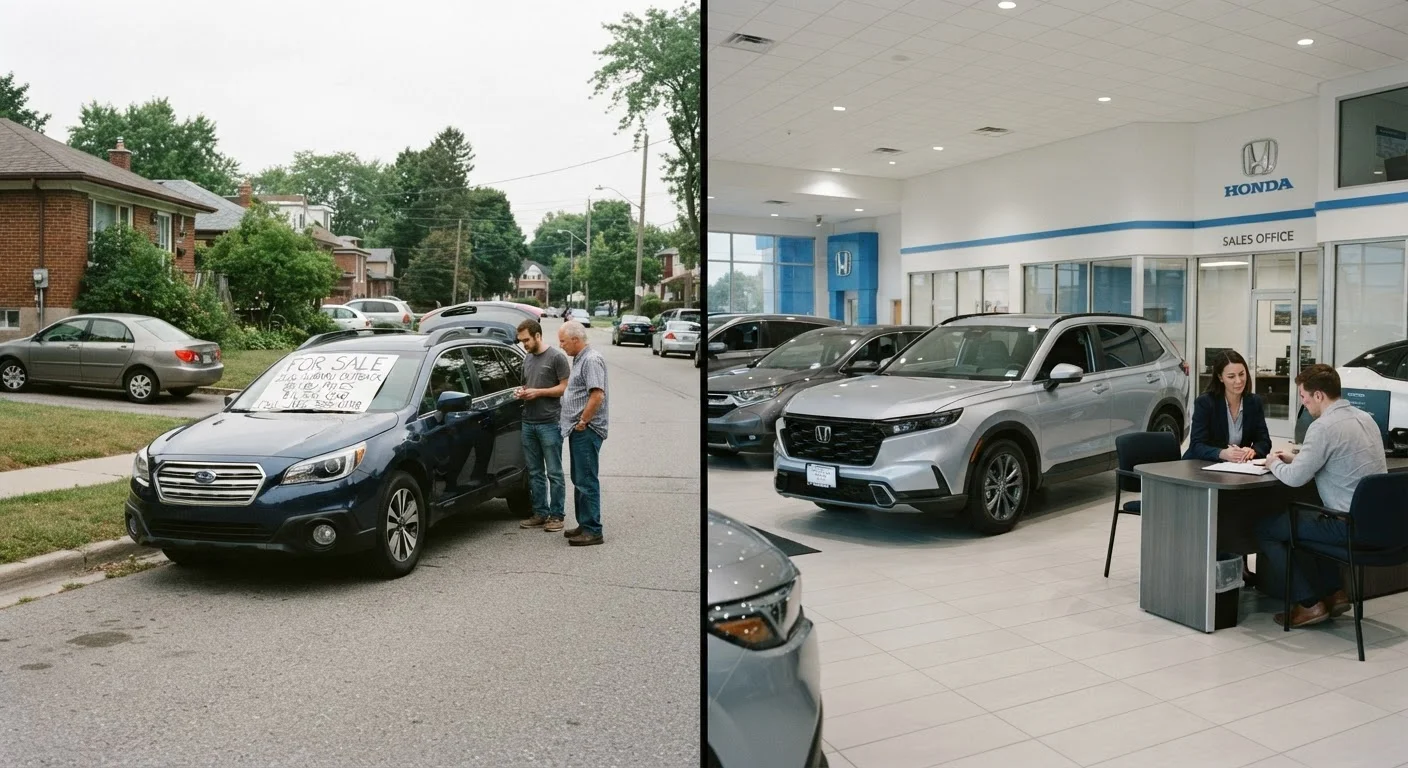
When you buy a used vehicle, the transaction typically flows through one of two channels: a licensed dealership or a private individual selling their own car. On the surface, the outcome looks the same - you end up with a car and a title. But the path to get there, and what protects you along the way, differs considerably.
Dealerships are regulated businesses. They must comply with federal laws like the FTC's Used Car Rule (which requires a Buyers Guide disclosing warranty terms) as well as applicable state consumer protection statutes. Private sellers, by contrast, are individuals operating outside most of those regulatory frameworks. That distinction shapes nearly every dimension of the buying experience - from how you negotiate to what happens if something goes wrong after the sale.
For a broader look at how these transactions fit into the overall purchase process, see The Car-Buying Process, Start to Finish.
Pricing and Negotiation
Private sellers generally list vehicles below dealership prices - they have no overhead costs, no reconditioning fees, and no commissions to account for. That price gap can be meaningful, particularly on older or high-mileage vehicles. However, the asking price is not always the final price in either channel.
With a private seller, negotiation tends to be more direct. There's typically one decision-maker, and the conversation is less structured. That can work in your favor, but it also means there's no standard process and no obligation to disclose known defects in many states.
At a dealership, negotiation involves more variables - trade-in value, financing terms, add-on products, and documentation fees can all affect the effective price you pay. Understanding each line item matters. Review Questions Worth Asking Before You Sign Anything at a Dealership before entering those conversations.
| Private Seller | Dealership | |
|---|---|---|
| Typical price | Often lower | Higher, includes overhead |
| Financing options | Buyer arranges independently | On-site financing available |
| Warranty coverage | Rarely included; sold as-is | Limited warranty or CPO options possible |
| Paperwork handled by seller | Minimal; buyer does more | Title, registration, tax often handled |
| Legal protections | Limited; state fraud laws apply | FTC Used Car Rule and state laws apply |
| Recourse after sale | Very limited without fraud evidence | More avenues via consumer protection law |
| Negotiation style | Direct, one decision-maker | Structured, multiple variables |
Financing, Paperwork, and Legal Protections
Financing is one area where dealerships hold a clear practical advantage. They can arrange loans on-site through their lending partners, which is convenient - though not always the most cost-effective route. Arranging your own financing before visiting a dealership gives you leverage and a reference point for comparison. See Financing Through a Dealership vs. Your Own Lender for a detailed breakdown of both approaches.
Private sales are almost always cash or cashier's check transactions. Most banks and credit unions will issue a personal auto loan for a private purchase, but the process takes more coordination on your part.
On the paperwork side, dealerships handle the title transfer, registration, and in many states, sales tax collection directly. In a private sale, the buyer is typically responsible for completing the title transfer and registering the vehicle with the DMV within a state-mandated timeframe. Missing that window can result in penalties.
Always Verify the Title Before You Pay
Whether buying privately or from a dealer, run the VIN through a vehicle history report service and confirm the title is clean - free of liens, salvage designations, or flood damage flags. In a private sale, ask to see the physical title before agreeing to any price. A seller who can't produce the title promptly is a significant red flag.
Risk, Recourse, and What Happens After the Sale
This is where the two channels diverge most sharply. Private sales in most states are completed 'as-is,' meaning the seller has no legal obligation to repair defects or offer a refund - even if a significant mechanical issue appears shortly after purchase. Your primary recourse is limited to fraud claims, which require proving the seller knowingly misrepresented the vehicle's condition.
Dealerships must comply with implied warranty laws in many states, and they may offer limited warranties or certified pre-owned (CPO) programs that provide a defined coverage window. If a dealer engages in deceptive practices, state consumer protection agencies and the FTC provide avenues for complaint.
Regardless of which channel you use, an independent pre-purchase inspection by a qualified mechanic is one of the most practical steps you can take. It's particularly important in private transactions where disclosure standards are minimal. First-time buyers navigating these decisions may also find useful grounding in Buying Your First Car: A Practical Orientation.
This article is for general informational purposes only and does not constitute legal or financial advice. Regulations vary by state - verify title transfer requirements and consumer protection rules with your state's DMV and attorney general's office.
The content on this site is provided for informational purposes only and should not be considered a substitute for professional advice. While we strive to provide accurate and up-to-date information, we make no guarantees regarding its completeness or accuracy. Always consult a qualified professional for advice specific to your circumstances before making any decisions.